
How to Choose the Right Equipment Supplier for Your Business
An equipment supplier guide helps businesses evaluate, compare, and select suppliers that deliver reliable equipment, fair pricing, and long-term support.
Choosing the wrong equipment supplier can slow operations, increase costs, and damage customer trust. Yet many businesses rush this decision. They focus only on price. Or they rely on recommendations without verification. This often leads to late deliveries, poor after-sales service, or equipment failures at the worst time.
This equipment supplier guide is designed to help business owners, procurement managers, and startup founders make smarter decisions. It answers the real questions people ask when searching how to choose an equipment supplier. Each section starts with a clear, direct answer, followed by practical detail you can act on.
The approach follows the PAS framework. First, we highlight common problems businesses face with suppliers. Then we explain the risks of ignoring them. Finally, we provide a clear solution with proven evaluation steps, supported by industry data and real-world case examples.
If you want fewer breakdowns, predictable costs, and suppliers who actually support your growth, this guide is for you.
Why do businesses struggle to choose the right equipment supplier?
Short answer: Most businesses lack a structured evaluation process and rely on price or convenience.
The problem usually starts with urgency. Equipment is needed fast. A production line is expanding. A restaurant is opening. A warehouse is upgrading. In these moments, businesses often skip supplier research.
According to a 2023 procurement study by Deloitte, over 42% of mid-sized businesses reported operational delays due to supplier-related issues within the first year of onboarding. The top reasons were inconsistent quality, unclear service agreements, and poor communication.
Another issue is information overload. Suppliers present polished catalogs, testimonials, and discounts. Without a framework, it is difficult to separate marketing from reality.
This is why a clear equipment supplier guide matters. It replaces guesswork with criteria.
What risks come from choosing the wrong equipment supplier?
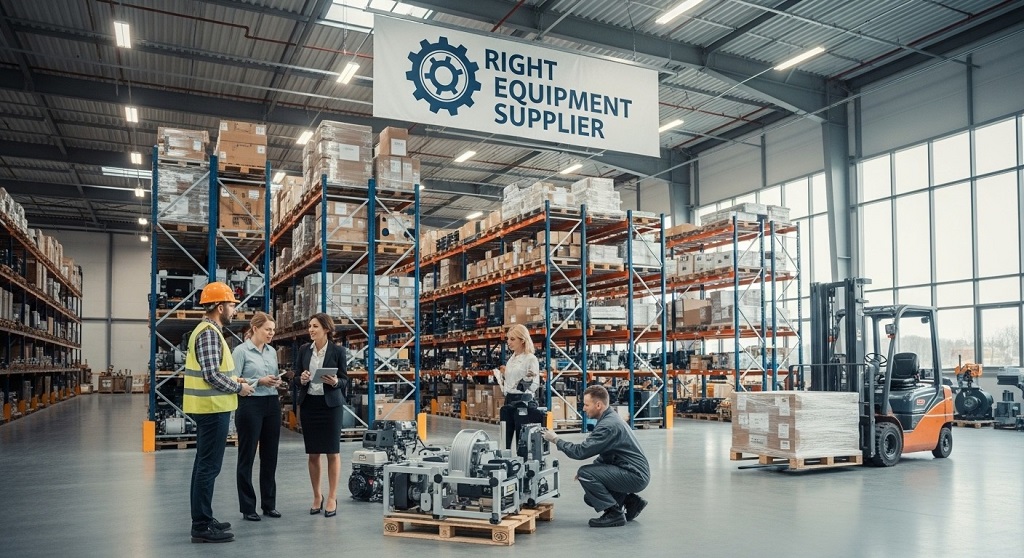
Short answer: The wrong supplier increases downtime, raises long-term costs, and creates dependency risks.
Many businesses underestimate downstream costs. Cheap equipment often means higher maintenance expenses. Limited warranties lead to frequent repairs. Spare parts take weeks to arrive.
A manufacturing case study published by McKinsey showed that companies with unreliable equipment suppliers experienced up to 18% more unplanned downtime annually. For businesses operating on thin margins, this can erase profits.
There is also reputational risk. When equipment fails, customers feel the impact. Late orders. Reduced service quality. Missed deadlines.
The agitation here is real. Supplier mistakes become your problem.
How should you define your equipment requirements before contacting suppliers?
Short answer: Document your operational needs, performance standards, and growth plans.
Before asking how to choose an equipment supplier, clarify what you need. This step prevents costly mismatches.
- Define technical specifications and capacity requirements
- Set acceptable performance benchmarks
- Estimate usage volume and operating conditions
- Consider scalability for future growth
For example, a logistics company that underestimated daily load cycles had to replace forklifts within 18 months instead of the expected five years. The issue was not the supplier. It was unclear requirements.
Strong requirements act as a filter. Weak ones attract problems.
How important is supplier experience in your industry?
Short answer: Industry-specific experience reduces onboarding risk and setup errors.
Not all equipment suppliers understand your operational environment. A supplier experienced in retail may struggle with industrial compliance standards.
Ask direct questions:
- How many clients do you serve in my industry?
- Can you share case examples?
- Do you understand regulatory or safety requirements?
In a 2022 B2B sourcing report, businesses working with industry-specialized suppliers reported 27% faster implementation times.
Experience is not about years alone. It is about relevance.
How do you evaluate equipment quality and reliability?
Short answer: Review certifications, testing data, and failure rates.
Quality claims are easy to make. Evidence is harder.
Look for:
- ISO or relevant industry certifications
- Documented testing procedures
- Mean time between failure (MTBF) data
- Warranty coverage details
According to ISO data, certified equipment reduces defect rates by an average of 21% in industrial environments.
Ask suppliers for documentation. A reliable supplier will provide it without hesitation.
What role does pricing play when choosing an equipment supplier?
Short answer: Pricing should be evaluated as total cost of ownership, not unit cost.
Many businesses fall into the price trap. They compare quotes line by line without considering long-term expenses.
Total cost of ownership includes:
- Initial purchase price
- Maintenance and servicing costs
- Energy or operational efficiency
- Downtime impact
- Replacement parts availability
A construction firm study showed that equipment with a 12% higher upfront cost resulted in 30% lower five-year operating expenses.
Cheap equipment is often expensive later.
How can after-sales support affect supplier performance?
Short answer: Strong after-sales support reduces downtime and protects productivity.
Support is often ignored until something breaks.
Evaluate:
- Response times for service requests
- Availability of local technicians
- Spare parts stock levels
- Service-level agreements (SLAs)
A food processing company improved uptime by 22% after switching to a supplier with guaranteed 24-hour service response.
Support is not optional. It is operational insurance.
How do supplier contracts and warranties protect your business?
Short answer: Clear contracts reduce disputes and unexpected costs.
Read contracts carefully. Focus on:
- Warranty length and exclusions
- Maintenance responsibilities
- Replacement or refund policies
- Termination clauses
Ambiguous terms often favor suppliers. Clarify before signing.
Should you prioritize local or global equipment suppliers?
Short answer: The right choice depends on speed, support, and supply chain reliability.
Local suppliers offer faster support and easier communication. Global suppliers may offer broader product ranges and pricing advantages.
| Factor | Local Supplier | Global Supplier |
|---|---|---|
| Response Time | Fast | Moderate |
| Pricing | Moderate | Competitive |
| Support Access | Direct | Centralized |
Hybrid sourcing is often the best solution.
How can supplier references and reviews guide your decision?
Short answer: Verified references reveal real-world performance.
Ask for recent client references. Contact them. Ask about reliability, support, and communication.
Online reviews help, but direct conversations are more accurate.
What evaluation checklist should you use before final selection?
Short answer: Use a weighted scoring system based on risk and value.
- Technical fit
- Industry experience
- Total cost of ownership
- Support quality
- Contract clarity
This structured approach turns a risky decision into a controlled process.
What is the final step in choosing the right equipment supplier?
Short answer: Test the supplier relationship before full commitment.
Choosing the right supplier is not about perfection. It is about alignment. The best suppliers understand your business, support your growth, and reduce operational stress.
This equipment supplier guide shows that supplier selection is a strategic decision, not a purchasing task. Businesses that invest time here see fewer breakdowns, predictable costs, and stronger partnerships.
Call to Action: Use this guide as your evaluation checklist. Shortlist suppliers. Ask hard questions. Compare total value, not just price. If you want help creating a supplier evaluation template or scoring model, start now and build a supplier network that supports long-term growth.
Frequently Asked Questions About Choosing an Equipment Supplier
How long should it take to choose an equipment supplier?
Answer: Most businesses should spend 2–6 weeks evaluating suppliers, depending on equipment complexity.
Is it risky to switch equipment suppliers?
Answer: Switching suppliers carries short-term risk but often reduces long-term costs and downtime when done with planning.
Should startups choose smaller equipment suppliers?
Answer: Startups benefit from flexible suppliers, but reliability and support matter more than supplier size.
How many suppliers should you compare?
Answer: Comparing 3–5 qualified suppliers provides enough data without slowing decisions.
What documents should an equipment supplier provide?
Answer: Certifications, warranties, service agreements, and technical specifications are essential.
Can long-term contracts lower equipment costs?
Answer: Yes. Long-term agreements often reduce pricing by 10–20% through volume and service bundling.
Related Topics: How Local SEO Agencies Drive Business Growth
Related Topics: What Factors Influence Pricing for Wedding Photography in Huntsville AL