
How to Use Surf Fishing Rigs in Rough and Windy Conditions
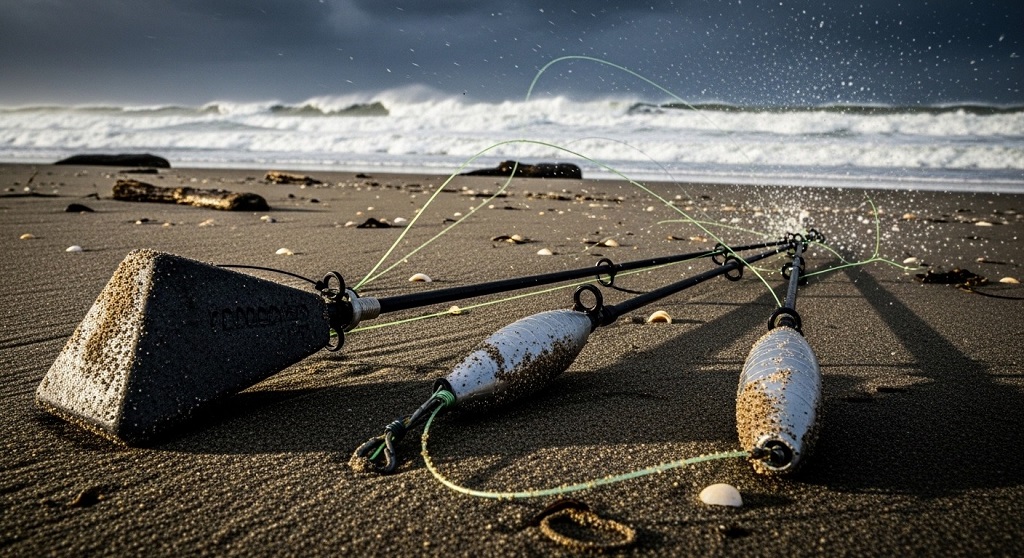
Rough surf and high winds make standard setups fail fast. Switch to heavy surf rigs with gripping sinkers like Sputnik weights (also called spider weights), use fish finder or pulley rigs, cast low and fast, keep leaders short, and spread your rods along the beach. These adjustments let you hold bottom, reduce tangles, and reach feeding zones where fish hunt dislodged bait in turbulent water.
Many anglers pack up when waves crash hard and gusts hit 20–30 mph. Yet experienced surf fishermen know these days often deliver the best bites. Strong currents and churning waves stir up sand fleas, crabs, and small baitfish. Predators like striped bass, redfish, or drum move in close to feed aggressively. The key is adapting your rig and technique instead of fighting the elements. This guide covers practical steps to turn tough days into productive ones, focusing on heavy surf rigs and rough surf fishing tips that work in real conditions.
Which Surf Fishing Rigs Work Best in Heavy Surf and Strong Winds?
The fish finder rig stands out as the top choice for rough surf fishing. Pair it with a heavy gripping sinker like a Sputnik or pyramid. For even tougher hold, use a pulley rig with short snoods. Avoid long-leader high/low rigs—they tangle easily in waves.
The fish finder rig slides freely above the weight. This lets fish take bait without feeling immediate resistance, crucial when currents pull hard. Tie a barrel swivel to your main line, add a sinker slide, then attach 18–36 inch leader to a 2/0–6/0 circle hook depending on target species. Use 20–40 lb fluorocarbon leader for abrasion resistance against sand and shells.
In extreme rough surf, switch to Sputnik weights. These feature wire arms that dig into sand like anchors. Anglers report they hold in 4–6 oz sizes where standard pyramids drag away. One guide noted using Sputniks kept baits in place during 25+ mph gusts when pyramids failed. Pulley rigs help too—clip-down designs get distance, but shorten snoods to 12–18 inches to cut tangles from wave action.
Avoid Carolina rigs in very rough water unless using heavier weights; they work better in moderate surf. Texas rigs suit weedy or rocky areas but lose control in heavy current.
How Do You Choose the Right Sinker for Rough Surf Fishing?
Use 4–8 oz Sputnik or storm sinkers in rough and windy conditions. These grip sand better than pyramids or eggs, preventing your rig from tumbling in swells and rips.
Standard pyramid sinkers dig in mild surf but lift in heavy waves. Sputniks deploy arms on impact, locking into bottom. Experienced anglers carry a mix: 4 oz for moderate current, 6–8 oz when wind pushes whitecaps. Thinner main line (20–30 lb braid) reduces water pressure that pulls sinkers free. One common mistake is oversizing line—thicker diameters catch more turbulence and drag rigs along.
Test weights on site. Cast, let it settle, then feel for movement. If it shifts quickly, upsize. In windy casts, heavier sinkers punch through gusts for better distance.
What Casting Techniques Help in Windy Surf Conditions?
Cast low and fast with a sidearm motion. Keep the rod tip close to the water, flip the bail immediately on splashdown, and maintain low line to cut wind resistance.
Overhead casts balloon in headwinds. Sidearm or low pendulum reduces sail effect. Use 10–12 foot surf rods rated heavy for leverage. Braid main line (20–40 lb) with low stretch helps feel bites through chop. After the cast, keep the tip low during retrieve or soak to avoid wind whipping slack line.
In crosswinds, angle casts slightly upwind so line bows into the gust rather than blowing back. Practice on calmer days—timing the bail close prevents loops that tangle in rough surf.
How Should You Set Up Your Gear and Position in Rough Surf?
Spread rods 20–50 yards apart along the beach. Use tall sand spikes or tripods to keep lines high above waves and weed. Shorten leaders to 18–24 inches max to minimize tangles.
Rough surf moves fast. Spreading setups covers more water and increases chances of hitting active feeding lanes. Tall spikes lift line out of floating debris common in storms. Position near sandbars or rips where bait concentrates—look for darker water channels or breaking wave patterns.
Safety first: Never turn your back on the ocean. Fish with a partner in big surf. Wear waders with belt and cleated boots for grip on wet sand.
What Baits and Presentations Work in Rough and Windy Surf?
Stick to durable baits like cut mullet, finger mullet, shrimp, sand fleas, or crab chunks. Use synthetic baits like Fish Gum when naturals wash off fast. Present near bottom with minimal float—let natural movement attract fish.
Choppy water dislodges prey, so fish feed aggressively on scent-heavy offerings. Whole small mullet or large shrimp on circle hooks trigger strikes from drum or bass. Avoid soft plastics that tear quickly. In heavy wind, heavier baits cast farther and stay put.
How Do You Fight and Land Fish in Rough Surf?
Keep steady pressure, use wave momentum to bring fish closer, and time landings between sets. Walk backward up the beach as waves push the fish in.
Strong undertow pulls hard. Don’t horse the fish—let it run, then gain line on receding waves. Use long-handled net or lip-grip for safe landing in whitewater. Many lost fish happen at the edge when a wave knocks them off.
Conclusion: Put These Rough Surf Fishing Tips to Work Today
Rough and windy conditions test your setup, but they reward prepared anglers. Heavy surf rigs with Sputnik weights, fish finder designs, low casts, short leaders, and strategic positioning turn tough days into memorable catches. Fish feed hard when waves churn bait—adapt, stay safe, and persist.
Next time forecasts show high winds and big surf, grab your gear instead of staying home. The fish won’t wait. Head to the beach, apply these heavy surf rigs and rough surf fishing tips, and see the difference. Share your results in the comments—what worked for you in brutal conditions? Tight lines.
FAQs About Surf Fishing Rigs in Rough and Windy Conditions
What is the best rig for rough surf fishing?
The fish finder rig with a heavy Sputnik sinker ranks as the best for rough surf. It allows natural bait presentation while the gripping weight holds bottom in strong currents and waves.
Do Sputnik weights really make a difference in heavy surf?
Yes. The wire arms dig deep into sand, holding 4–8 oz setups where pyramids drag. Anglers consistently report longer bait stays in feeding zones during 20+ mph winds and big swells.
How much weight should I use in windy rough surf?
Start with 4–6 oz and go to 8 oz if needed. Heavier weights punch wind on casts and resist current pull. Match to conditions—test on arrival.
Can you cast far in high winds for surf fishing?
Yes, with low sidearm casts, heavy sinkers, and braid line. Reduce leader length and keep casts fast to minimize wind effect. Distance drops, but accuracy to key zones improves.
What line strength works for heavy surf rigs?
20–40 lb braid main line with 30–50 lb fluorocarbon leader. Braid cuts through wind and current; fluoro resists abrasion from sand and structure.
Are there fish that bite better in rough surf?
Yes—striped bass, red drum, black drum, pompano, and sharks often feed aggressively in churned water. Turbulence dislodges food, drawing them close to shore.
Is it safe to surf fish in very rough and windy conditions?
It can be, but prioritize safety. Fish with a partner, watch for sneaker waves, use proper footwear, and never turn your back on the ocean. Know your limits and exit if conditions worsen.
Related Topics: How to Make Your Home Heating More Efficient This Winter
What Next: How Cold Press Juicers Preserve Vitamins and Enzymes