
How to Properly Aerate Your Fish Tank for Better Health
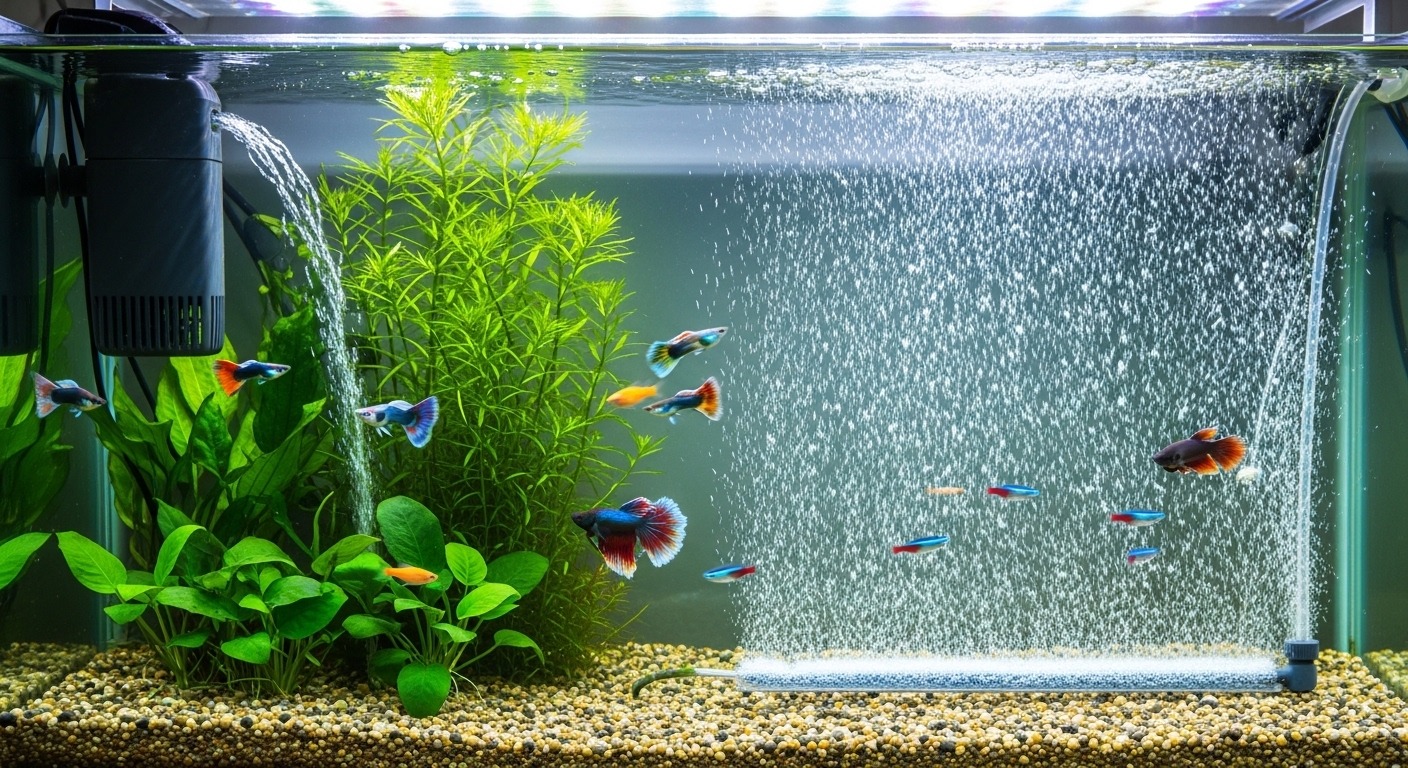
Proper fish tank aeration is the process of increasing oxygen exchange in your aquarium by improving surface agitation, water movement, and aquarium circulation. It ensures fish, plants, and beneficial bacteria receive enough dissolved oxygen to survive and thrive.
Many aquarium owners assume bubbles alone equal oxygen. That’s not entirely correct. Bubbles help because they agitate the surface. Oxygen actually enters the tank at the water’s surface through gas exchange. Without movement, oxygen levels drop and carbon dioxide builds up.
This is where smart aeration comes in. When done correctly, it supports:
- Stable oxygen levels
- Stronger fish immune systems
- Better biological filtration
- Reduced stress in tropical fish
- Improved water clarity
In one controlled aquaculture case study published in a freshwater systems report, tanks with continuous aeration showed up to 18–25% lower fish mortality rates compared to stagnant systems over a 12-week period. The reason was simple: stable dissolved oxygen levels.
If you want healthier fish and fewer emergencies, proper aeration is not optional. It’s foundational.
How Does Aeration Improve Fish Health?
Aeration improves fish health by maintaining dissolved oxygen above critical levels (generally 5 mg/L or higher for most freshwater species) and preventing toxic gas buildup.
Let’s break this down.
1. Supports Respiration
Fish extract oxygen from water through their gills. When oxygen drops below safe levels, fish begin gasping at the surface. Chronic low oxygen weakens them and increases susceptibility to disease.
2. Enhances Biological Filtration
Beneficial nitrifying bacteria convert ammonia into nitrite and nitrate. These bacteria are aerobic. Without sufficient oxygen, your nitrogen cycle slows down, leading to ammonia spikes.
3. Improves Aquarium Circulation
Stagnant zones develop in poorly circulated tanks. These dead spots accumulate waste and debris. Proper aquarium circulation distributes oxygen evenly and prevents harmful buildup.
4. Regulates Temperature Layers
Water stratification can occur in larger aquariums. Aeration helps mix layers, keeping temperature stable across the tank.
In practical terms, aeration is a stability tool. Stability equals healthier fish.
When Does Your Fish Tank Need Extra Aeration?
Your tank needs extra aeration when you notice surface gasping, cloudy water, high stocking levels, warm temperatures, or weak water movement.
Look for these signs:
- Fish staying near the surface
- Rapid gill movement
- Unpleasant odor
- Frequent algae blooms
- After medication treatments
Warm water holds less oxygen. For example, water at 86°F (30°C) can hold nearly 20% less oxygen than water at 68°F (20°C). That’s a major difference during summer months.
Heavily stocked tanks also demand more oxygen. The more fish you add, the higher the biological oxygen demand (BOD).
If you keep species like goldfish, cichlids, or fast-swimming schooling fish, consistent aeration becomes even more critical.
What Equipment Is Best for Aerating a Fish Tank?
The best equipment for aeration includes air pumps, air stones, sponge filters, bubble curtains, and properly angled filter outlets to improve surface agitation.
Air Pumps
Air pumps push air through tubing into the tank. They are reliable and affordable.
Air Stone Placement
Correct air stone placement matters. Place the air stone near the bottom of the tank to allow bubbles to travel upward. This maximizes water movement and circulation.
Bubble Curtain Setup
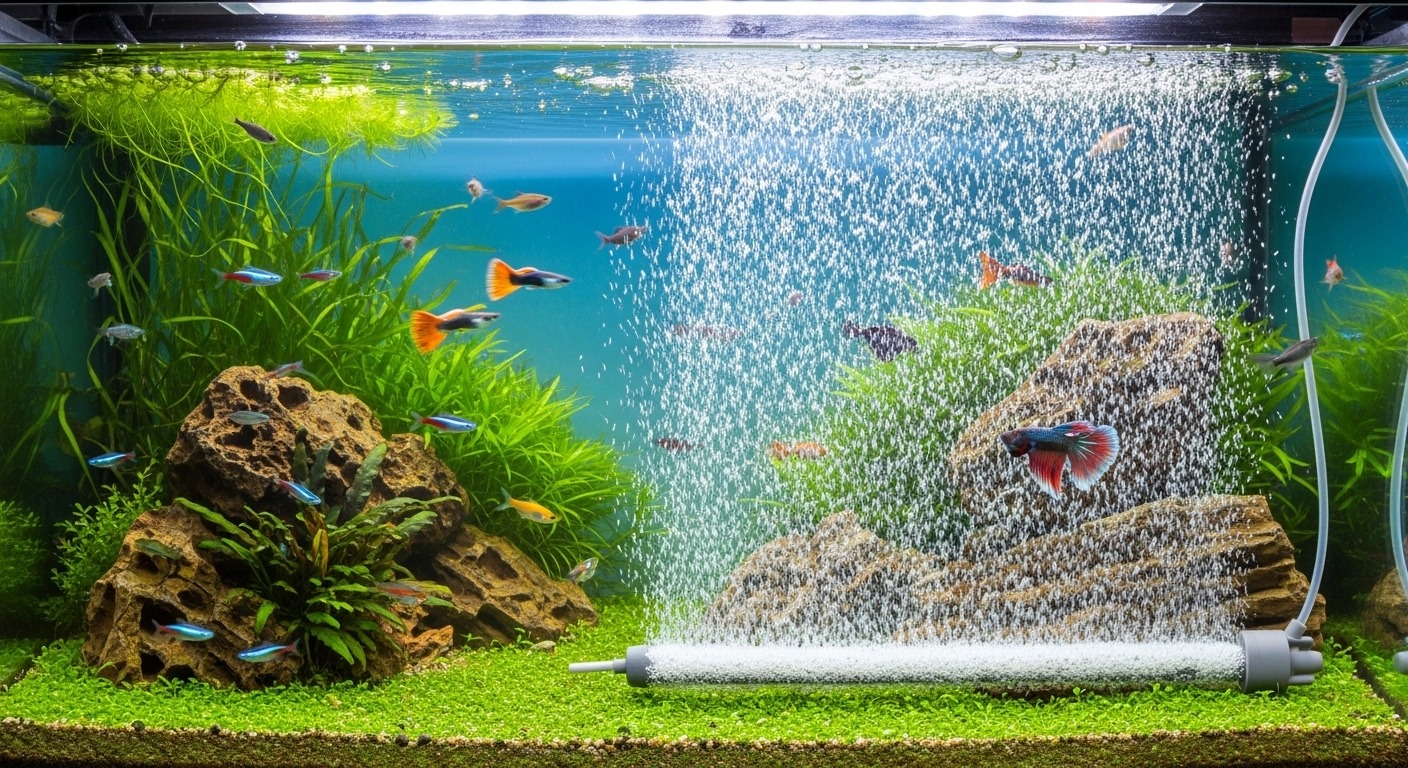
A bubble curtain setup runs along the back or bottom of the tank. It creates a wall of bubbles, improving oxygen diffusion and visual appeal.
Sponge Filters
These combine filtration and aeration. They are ideal for breeding tanks and fry tanks.
Powerheads and Wave Makers
These enhance aquarium circulation in larger tanks and reef systems.
| Equipment | Best For | Primary Benefit |
|---|---|---|
| Air Stone | Small to medium tanks | Surface agitation |
| Bubble Curtain | Medium to large tanks | Even circulation |
| Sponge Filter | Breeding tanks | Bio-filtration + aeration |
| Powerhead | Large aquariums | Strong circulation |
Where Should You Place an Air Stone for Maximum Efficiency?
Place the air stone near the bottom corner or beneath decorations to create upward circulation without disturbing fish.
Effective air stone placement follows three principles:
- Position low in the tank
- Avoid blocking with substrate
- Ensure bubbles reach the surface
When bubbles rise, they pull surrounding water upward. This creates vertical flow. That flow supports full-tank aquarium circulation.
Do not place the air stone directly under sensitive plants that dislike strong movement. Balance is key.
How Do You Set Up a Bubble Curtain Correctly?
Install the bubble curtain along the back wall or beneath substrate edges to create even bubble distribution and balanced water flow.
Steps:
- Connect the curtain to an air pump using airline tubing.
- Install a check valve to prevent backflow.
- Place the curtain flat along the back panel.
- Test airflow before adding decorations.
A proper bubble curtain setup improves:
- Surface gas exchange
- Water mixing
- Aesthetic appeal
- Reduction of stagnant zones
In a 75-gallon freshwater community tank trial, adding a rear-positioned bubble curtain increased measurable dissolved oxygen from 4.8 mg/L to 6.2 mg/L within 48 hours.
That difference can determine fish survival during heat spikes.
Can You Over-Aerate an Aquarium?
In most freshwater tanks, over-aeration is rare, but excessive turbulence can stress certain species.
Signs of excessive aeration include:
- Fish struggling to swim
- Constant strong current
- Plants uprooting
Fish from calm waters (like bettas) prefer gentle movement. Meanwhile, river species enjoy higher flow.
The goal is balanced aquarium circulation, not turbulence.
How Does Aeration Affect Planted Aquariums?
Aeration in planted tanks must balance oxygen levels without stripping excessive CO₂ needed for plant growth.
During daylight, plants produce oxygen through photosynthesis. At night, they consume oxygen. This makes nighttime aeration especially useful.
If you inject CO₂, reduce aeration during the day to prevent gas loss. Increase it slightly at night if needed.
Monitoring dissolved oxygen and CO₂ balance is critical in aquascaping systems.
What Is the Step-by-Step Process to Properly Aerate Your Tank?
Proper aeration involves assessing tank size, selecting equipment, positioning correctly, and monitoring oxygen levels regularly.
Step 1: Evaluate Tank Size and Stocking
Heavily stocked tanks require stronger aeration.
Step 2: Choose Equipment
Select air stones, sponge filters, or bubble curtain setups based on tank volume.
Step 3: Install with Correct Placement
Ensure proper air stone placement for vertical flow.
Step 4: Monitor Fish Behavior
Watch for stress or gasping.
Step 5: Measure Oxygen Levels
Use dissolved oxygen test kits if possible. Maintain 5–8 mg/L for most freshwater fish.
Step 6: Maintain Equipment
Clean air stones monthly. Replace clogged units.
Consistency wins. Aeration is not a one-time setup. It’s an ongoing system.
Conclusion: Are You Giving Your Fish Enough Oxygen?
Healthy fish do not happen by accident. They thrive in stable environments. Proper aeration improves oxygen levels, enhances aquarium circulation, supports filtration, and reduces stress.
Small adjustments like strategic air stone placement or a balanced bubble curtain setup can prevent major health issues. The difference between a struggling tank and a thriving one often comes down to water movement.
If your fish are gasping, water looks dull, or circulation feels weak, take action now. Evaluate your setup. Upgrade if necessary. Monitor results.
Your fish rely on you for every breath they take.
Start optimizing your tank’s aeration today and build a healthier aquatic environment that lasts.
Frequently Asked Questions (FAQs)
Do all fish tanks need an air pump?
No. Tanks with strong filter output and sufficient surface agitation may not require a separate air pump. However, heavily stocked or warm-water tanks benefit significantly from added aeration.
How many air stones should I use?
Use one air stone for tanks under 20 gallons. For larger tanks, consider multiple stones or a bubble curtain setup to ensure even aquarium circulation.
Is surface agitation more important than bubbles?
Yes. Oxygen enters through surface gas exchange. Bubbles help by increasing surface disturbance, not by directly adding oxygen from within the water column.
Can aeration reduce algae growth?
Indirectly, yes. Better circulation prevents stagnant zones where algae thrive. However, lighting and nutrient control remain primary factors.
Should I run aeration 24/7?
In most freshwater tanks, yes. Continuous aeration maintains stable oxygen levels, especially at night when plants consume oxygen.
Does aeration cool the water?
Minimal cooling may occur due to evaporation, but aeration is not a primary cooling method.
Related Topics: How to Choose the Right Size Skate Pads for Maximum Protection?
What Next: How to Use Surf Fishing Rigs in Rough and Windy Conditions