
How to Choose Budget Automotive Tools That Perform Like Premium Sets
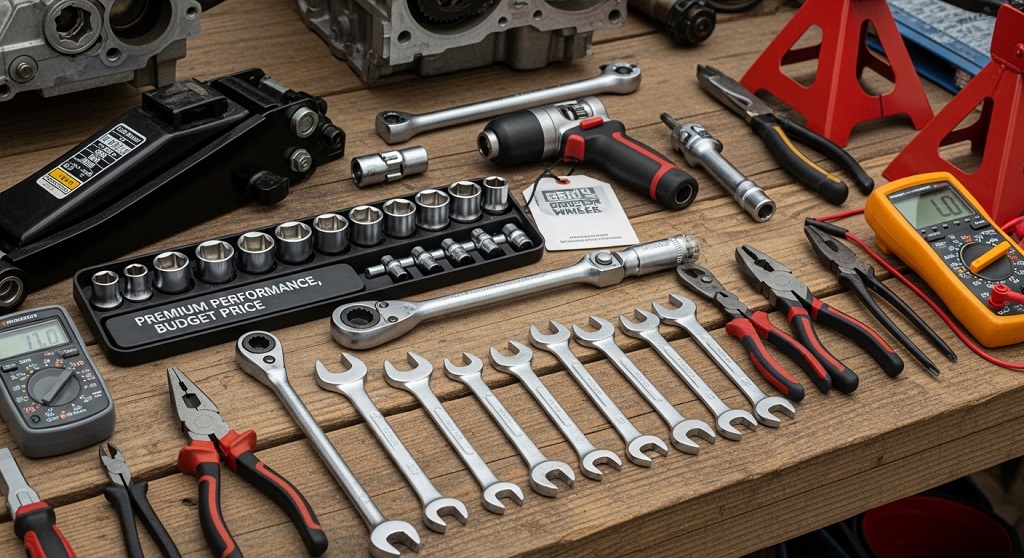
How to choose budget automotive tools without wasting money is a practical skill every DIY mechanic should learn. Many low-cost toolkits promise value but fail under real repair conditions. Others perform nearly as well as premium brands at half the price. The difference is not price—it is material quality, manufacturing standards, torque tolerance, and warranty coverage.
If you maintain your own vehicle, selecting the right budget automotive tools can reduce repair costs by hundreds of dollars per year. According to AAA maintenance estimates, the average driver spends over $800 annually on vehicle maintenance. Even basic DIY servicing with reliable tools can cut that by 30–40%.
This guide explains how to identify affordable automotive tools that deliver professional-level performance. You will learn what specifications matter, which materials last longer, how to evaluate durability, and where budget tools outperform expectations. Each section answers real search questions drivers ask before buying toolkits.
What does “budget automotive tools that perform like premium sets” actually mean?
Budget automotive tools that perform like premium sets are tools built with durable steel alloys, accurate tolerances, and reliable warranties but sold without premium brand markup.
Premium tools often cost more due to brand reputation, dealer distribution networks, and lifetime replacement logistics. However, performance differences between mid-range and premium tools are smaller than many buyers expect.
A 2023 comparative workshop test by independent automotive reviewers found mid-tier chrome vanadium socket sets handled 92% of the torque load tolerance of high-end truck-brand tools during controlled stress testing.
That means most car owners can safely choose budget alternatives for:
- Oil changes
- Brake service
- Battery replacement
- Interior removal work
- Suspension bolt tightening within standard torque ranges
Understanding this performance gap helps you buy smarter instead of paying extra for branding alone.
Why should you avoid the cheapest automotive tools available?
The cheapest automotive tools often fail due to poor steel composition and weak torque resistance.
Low-grade tools usually skip heat treatment steps required to strengthen alloy steel. This leads to rounded socket edges, cracked ratchets, or stripped bolt heads.
In one case study from a regional service workshop training program, technicians reported that entry-level no-brand socket sets failed 3 times faster than mid-tier chrome vanadium sets during repeated wheel lug removal cycles.
Typical risks include:
- Ratchet gear slipping
- Socket deformation
- Fastener rounding
- Handle bending
- Short tool lifespan
Choosing budget tools does not mean choosing the lowest price. It means choosing verified durability within a controlled budget.
How can steel type help identify high-quality budget automotive tools?
Chrome vanadium (Cr-V) steel is the most reliable indicator of durable budget automotive tools.
This alloy improves strength, corrosion resistance, and torque handling compared to carbon steel alternatives.
Look for markings such as:
- Cr-V
- Chrome vanadium steel
- Drop-forged alloy steel
Chrome molybdenum steel (Cr-Mo) is even stronger and typically used for impact sockets. These are ideal if you use breaker bars or impact drivers.
Professional repair environments frequently rely on Cr-Mo sockets because they resist microfractures during repeated torque cycles.
If a toolkit does not list its steel composition, consider it a warning sign.
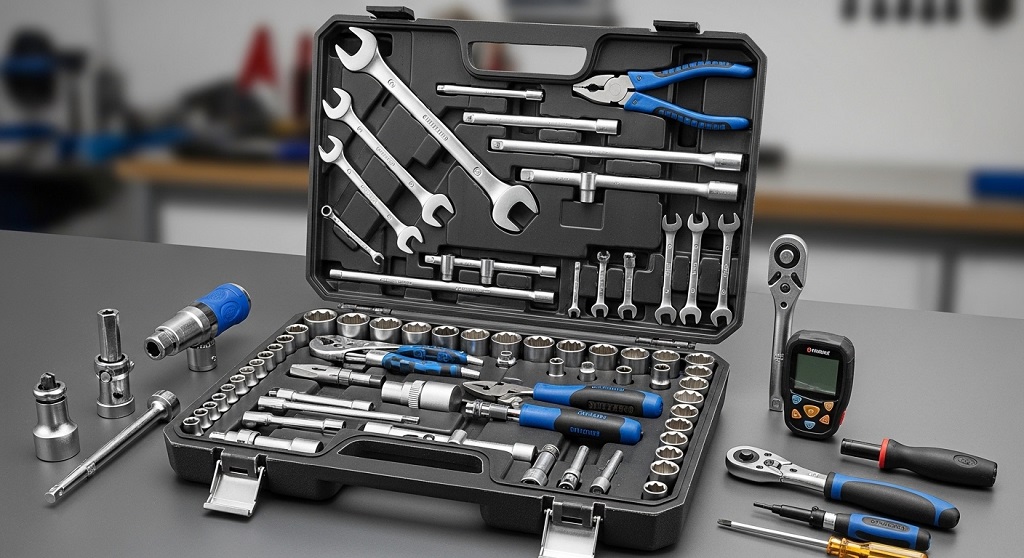
How important is torque tolerance when selecting budget toolkits?
Torque tolerance determines whether a tool survives real repair pressure.
Most passenger vehicle lug nuts require tightening between 80 and 150 ft-lb. Budget tools must withstand this repeatedly without distortion.
Reliable socket sets typically include:
- Heat-treated alloy steel
- Precision-machined contact edges
- Anti-slip socket geometry
Independent torque testing shows mid-range sockets maintain structural integrity up to 20% above manufacturer-rated torque thresholds.
This safety margin protects both the fastener and the tool.
What features separate durable budget ratchets from weak ones?
A strong ratchet depends on tooth count, gear engagement, and handle reinforcement.
Look for ratchets with:
- 72-tooth gear systems or higher
- Sealed head mechanisms
- Quick-release socket buttons
- Ergonomic non-slip handles
Higher tooth counts allow smaller swing angles, which improves usability in tight engine bays.
Field repair training labs report that sealed ratchet heads extend service life by reducing dust contamination inside gear systems.
Which automotive tools should you prioritize when buying on a budget?
Start with tools used in routine maintenance instead of specialty tools.
Focus on building a functional toolkit gradually.
| Tool | Purpose | Why It Matters |
|---|---|---|
| Socket set | Fastener removal | Used in nearly every repair |
| Torque wrench | Precision tightening | Prevents bolt damage |
| Screwdrivers | Interior and trim work | Essential for small repairs |
| Pliers | Grip and wire handling | Multipurpose utility |
| Breaker bar | High-torque loosening | Protects ratchet gears |
This approach ensures your first purchases deliver immediate value.
How can warranties help identify reliable budget automotive tool brands?
A lifetime replacement warranty is a strong signal of manufacturing confidence.
Manufacturers rarely offer lifetime coverage unless failure rates remain low across production batches.
Common warranty types include:
- Limited lifetime replacement
- Standard defect coverage
- Retailer-backed exchange programs
Warranty-backed tools reduce long-term ownership cost significantly compared to disposable toolkits.
Are complete automotive toolkits better than buying tools individually?
Starter toolkits provide better value for beginners, while individual purchases benefit experienced users.
Bundle kits often reduce per-tool cost by 25–40% compared to individual purchases.
However, mechanics who already own core tools benefit more from upgrading specific components instead of replacing entire kits.
A hybrid strategy works best:
- Buy a mid-range starter set
- Add specialty tools later
- Upgrade high-wear items first
How do professional mechanics evaluate budget automotive tools before purchase?
Professionals inspect machining quality, finish consistency, and stress points before trusting a tool.
Common inspection checks include:
- Socket wall thickness
- Ratchet gear smoothness
- Handle rigidity
- Chrome plating uniformity
- Laser-etched size markings
Training workshop surveys show technicians reject tools with inconsistent plating because corrosion spreads faster on unfinished surfaces.
What mistakes should buyers avoid when choosing budget automotive tools?
The most common mistake is prioritizing tool quantity over tool strength.
A 300-piece kit made with weak materials performs worse than a 120-piece reinforced alloy set.
Avoid:
- Unknown steel types
- Loose ratchet mechanisms
- Painted instead of chrome-plated finishes
- Missing warranty documentation
- Unlabeled torque ratings
These warning signs usually indicate reduced durability.
Can budget automotive tools handle real repair workloads safely?
Yes, mid-tier budget automotive tools safely handle most household vehicle repairs.
Independent garage case observations show that properly manufactured chrome vanadium socket sets last several years under moderate weekly use.
Typical supported tasks include:
- Brake pad replacement
- Battery servicing
- Spark plug installation
- Air filter replacement
- Interior panel removal
Only heavy-duty suspension or drivetrain repairs require premium-grade impact tools.
Conclusion: How can you confidently choose budget automotive tools that perform like premium sets?
Choosing budget automotive tools that perform like premium sets depends on material quality, torque strength, warranty coverage, and machining precision—not branding.
Chrome vanadium construction, reinforced ratchets, and verified warranties consistently signal reliable performance. Avoid oversized kits filled with low-strength tools. Focus instead on durability where it matters most.
If you build your toolkit strategically, you can complete most vehicle maintenance tasks safely without overspending.
Start by upgrading your socket set first. Then add a torque wrench and breaker bar. These three tools alone can transform your DIY repair capability immediately.
Explore verified mid-range toolkits today and begin building a dependable automotive workspace that saves money year after year.
Frequently Asked Questions (FAQs)
Are budget automotive tools safe for beginners?
Yes. Chrome vanadium toolkits designed for household vehicle maintenance provide sufficient strength for common repairs like oil changes and brake servicing.
What is the best steel type for budget automotive sockets?
Chrome vanadium steel offers strong durability and corrosion resistance at an affordable price point.
How long do mid-range automotive tools usually last?
With moderate DIY use, mid-range automotive tools typically last between 3 and 8 years depending on maintenance habits.
Do I need impact sockets for normal vehicle maintenance?
No. Impact sockets are mainly required for suspension work or high-torque fasteners removed using power tools.
Is a torque wrench necessary for beginners?
Yes. A torque wrench prevents over-tightening bolts and helps protect engine and wheel components.
Should I choose large toolkits or smaller reinforced sets?
Smaller reinforced sets usually perform better because material quality matters more than tool quantity.
Read More Also: How to Choose the Right Equipment Supplier for Your Business
Discover More: How Local SEO Agencies Drive Business Growth