
Makita XDT19Z vs DeWalt vs Milwaukee: Which Impact Driver Wins?
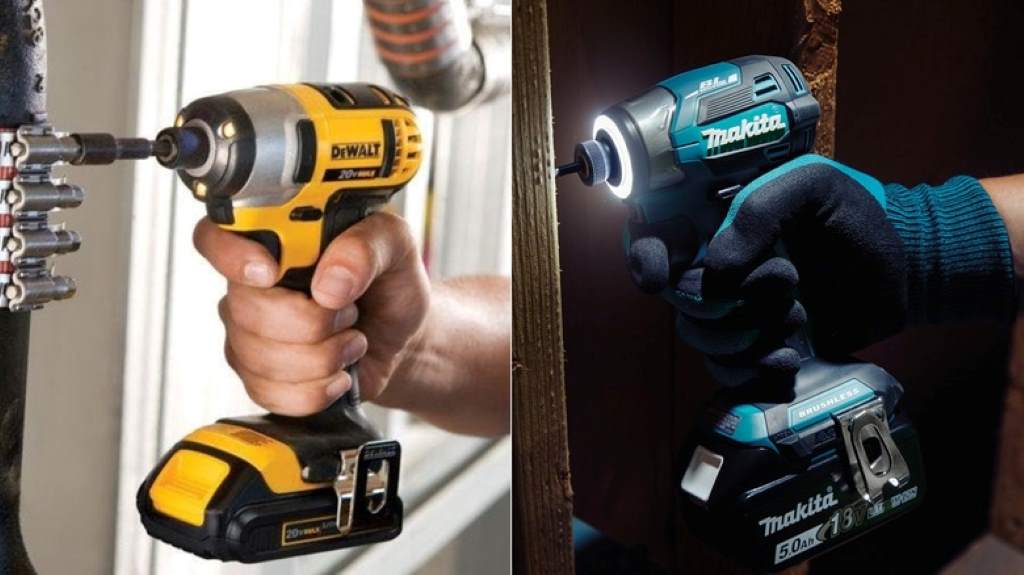
Cordless impact drivers transform tough fastening jobs into quick tasks. Professionals and DIYers alike rely on them daily. Yet choosing the right one matters greatly. Many users debate top brands in this tool comparison. For instance, if you want detailed insights on Makita’s offering, Compare DeWalt/Milwaukee/Makita to see how models stack up.
Impact drivers deliver high torque in compact forms. They excel at driving long screws and lags without stripping heads. According to U.S. Bureau of Labor Statistics data, construction workers face over 2.6 million recorded injuries and illnesses annually in private industry. Proper tools reduce strain and boost safety. Moreover, OSHA highlights that ergonomic designs help prevent musculoskeletal issues in repetitive tasks.
This article dives deep into a head-to-head tool comparison. We focus on the Makita XDT19Z, a versatile 18V brushless model. We pit it against DeWalt’s flagship 20V Max XR options like the DCF887 or compact DCF850 Atomic. Then we include Milwaukee’s powerhouse M18 Fuel 2953. All three represent premium 18V-class performers as of late 2025.
Readers seek real-world value here. We cover performance metrics from independent tests. We explore features, ergonomics, and ecosystem strengths. By the end, you gain clear guidance on which suits your needs.

Why Impact Drivers Matter in Modern Toolkits
Impact drivers dominate fastening work today. They combine rotation with concussive blows. This setup sinks screws faster than standard drills. In addition, brushless motors now standard in pro models extend runtime and durability.
Recent reviews from Pro Tool Reviews and TechGearLab show these tools handle heavy loads effortlessly. For example, top models drive ledger screws in seconds. They also manage high-torque fastening without cam-out.
However, not all perform equally. Differences emerge in torque delivery, speed control, and size. That’s why direct comparisons help. Additionally, battery ecosystems play a role if you own multiple tools.
Key Specs Comparison: Makita XDT19Z, DeWalt DCF887/DCF850, Milwaukee 2953
Specs provide a starting point in any tool comparison. Here we break down the latest figures.
- Makita XDT19Z (18V LXT Brushless 4-Speed): Up to 1,600-1,800 in-lbs torque (varies by mode), 3,600 max RPM, multiple assist modes like Quick-Shift for precision.
- DeWalt DCF887 (20V Max XR): 1,825 in-lbs torque, 3,250 RPM, 3,800 IPM, three speeds plus Precision Drive.
- DeWalt DCF850 Atomic: Matches DCF887 specs but in ultra-compact body (under 4 inches head-to-back).
- Milwaukee M18 Fuel 2953: 2,000 in-lbs torque, 3,900 RPM, 4,400 IPM, four modes including self-tapping screw mode.
Milwaukee leads in raw numbers. Yet real tests reveal nuances. Makita shines in controlled driving. DeWalt balances power with compactness.
Performance in Independent Tests
Pro Tool Reviews and Torque Test Channel data highlight strengths. Milwaukee’s 2953 often tops fastening speed and torque benchmarks. It drives large lags quickest in many shootouts.
However, Makita’s assist modes prevent overdriving. They excel in delicate woodwork or metal fastening. DeWalt’s DCF850 surprises with near-flagship power in tiny form. It fits tight spaces better than rivals.
In noise and vibration, all perform well. Brushless designs reduce fatigue over long sessions.
Ergonomics and Build Quality
Comfort drives daily use. Milwaukee’s 2953 measures just 4.47 inches long. It feels balanced and lightweight.
Makita offers excellent grip and low vibration. Users praise its refined trigger feel. DeWalt’s models feature tri-LED lights that illuminate workspaces effectively.
Moreover, all include belt clips and bit holders. Durability holds strong across brands. Brushless motors and robust housings withstand jobsite abuse.
Special Features That Set Them Apart
Features add practical value in tool comparisons.
Makita includes Quick-Shift and T-modes. These ramp up slowly then finish fast. They minimize strip-outs.
DeWalt’s Precision Drive slows final turns. It aids accuracy in finish work.
Milwaukee’s Drive Control offers four settings. Self-tapping mode reduces walking on metal.
Lighting varies too. DeWalt’s three LEDs cast fewer shadows. Milwaukee’s tri-LED competes closely.
Battery Ecosystems and Runtime
All run on mature platforms. Makita’s 18V LXT boasts hundreds of tools. DeWalt’s 20V Max grows rapidly. Milwaukee’s M18 leads in variety.
Runtime depends on batteries. Higher-capacity packs extend work. All brands offer fast charging.
Cross-compatibility matters if expanding kits. Each ecosystem locks you in somewhat. Yet shared batteries save money long-term.
Related:
What to Ask Before Hiring the Best Plumbers near Me for Complex Repairs
Real-World Applications: Which Excels Where?
General contractors favor Milwaukee for raw power. It handles framing and decking swiftly.
Finish carpenters lean toward Makita. Assist modes protect materials.
HVAC or cabinet installers pick DeWalt Atomic. Compact size accesses confined areas.
In mixed use, any shines. However, personal preference often decides.
Pros and Cons Summary
Every model has trade-offs.
Makita XDT19Z Pros: Versatile modes, smooth control, reliable ecosystem.
Cons: Slightly lower peak torque than rivals.
DeWalt DCF887/DCF850 Pros: Excellent balance, strong lighting, compact options.
Cons: Torque trails Milwaukee in extreme tests.
Milwaukee 2953 Pros: Top power and speed, compact design.
Cons: Modes less specialized for precision than Makita.
Which Impact Driver Wins Overall?
No single winner fits everyone. Milwaukee’s M18 Fuel 2953 takes the crown for sheer performance. It drives fastest and hardest in most tests.
However, Makita XDT19Z wins for precision and control. DeWalt offers best versatility, especially with the Atomic compact.
Consider your primary tasks. Test them if possible. All deliver pro-grade quality.
Choose Milwaukee for maximum power. Opt for Makita for finesse. Select DeWalt for balanced compactness.
Whichever you pick, you gain a top-tier tool. Invest based on your workflow.
Ready to Upgrade Your Fastening Game?
Evaluate your current setup. Then grab the model that aligns best. Your projects will thank you.
FAQs
Which impact driver has the most torque?
Milwaukee’s M18 Fuel 2953 leads with 2,000 in-lbs. It outperforms in heavy-duty tests.
Is the Makita XDT19Z good for precision work?
Yes. Its multiple assist modes excel at preventing overdriving and stripping.
How does DeWalt’s Atomic DCF850 compare in size?
It remains the most compact. Yet it matches full-size power specs.
Which brand has the best battery ecosystem?
Milwaukee offers the widest M18 range. Makita and DeWalt follow closely.
Are these impact drivers suitable for daily professional use?
Absolutely. All feature brushless motors and durable builds for demanding jobs.
- Pro Tool Reviews: Best Cordless Impact Driver Head-to-Head Review 2025 – https://www.protoolreviews.com/best-impact-driver-review/
- TechGearLab: The Best Impact Driver of 2025 – https://www.techgearlab.com/topics/tools/best-impact-driver
- U.S. Bureau of Labor Statistics: Employer-Reported Workplace Injuries and Illnesses, 2023 – https://www.bls.gov/news.release/osh.nr0.htm
- OSHA Common Statistics – https://www.osha.gov/data/commonstats