
How Much Is Stainless Steel Scrap Worth, and How Do You Tell Grades Apart?
Two kitchen sinks sit side by side at the scrap yard. One earns noticeably more per pound than the other, and the seller has no idea why. The answer is hidden in a metal’s chemistry.
The stainless steel scrap price is not one number. It depends on the grade, and the grade depends mostly on how much nickel the steel contains. This guide explains the common grades, how to test your material at home, and how to sort it so you are paid for what you really have.
What is stainless steel scrap?
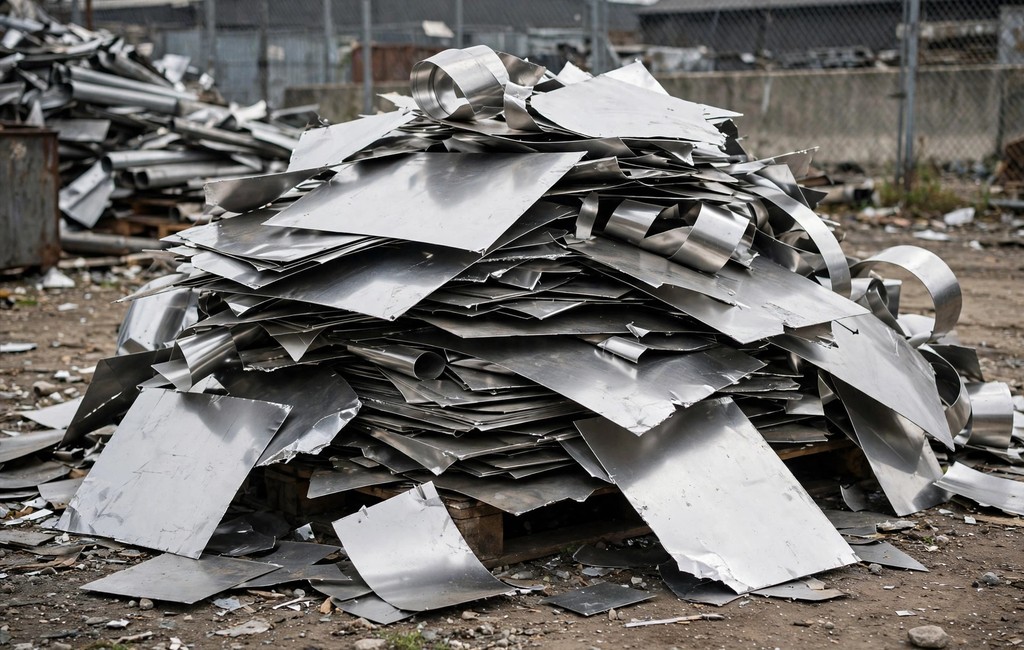
Stainless steel is steel alloyed with chromium, which forms a protective layer that resists rust. Some grades add nickel, molybdenum, or other elements for extra strength or corrosion resistance. It appears in sinks, appliances, cookware, restaurant equipment, tanks, railings, fasteners, and countless industrial parts.
In the scrap trade it is usually treated separately from carbon steel because of its alloy content, and it is often listed under shorthand such as SS or stainless. The more nickel and molybdenum it contains, the more it is generally worth.
The main grades and why they pay differently
- 304: The most common austenitic grade, containing around 8 percent nickel. It is used in sinks, cookware, and food equipment, and it is usually the baseline for scrap pricing. It is generally non-magnetic or only weakly magnetic.
- 316: Contains nickel plus molybdenum for better corrosion resistance, often used in marine and chemical settings. It typically earns more than 304 because of the added alloy content.
- 430: A ferritic grade with little or no nickel. It is magnetic and usually earns less than 304. Appliance panels and some trim are common sources.
- Other alloys: Duplex and specialty stainless can have unusual compositions and may be priced separately.
Stainless steel scrap price: what should you expect?
Stainless typically pays more than ordinary steel and less than copper or brass. Rates for common grades are generally in the range of tens of cents per pound up to around a dollar, depending on grade and market conditions, though figures change often. Nickel prices influence the market, so rates can move even if other metals do not.
For a quick example, at a hypothetical $0.40 per pound, a 50-pound batch of clean 304 would bring $20. A magnetic 430 batch of the same weight would bring less. The only way to know your real figure is to check the current posted rate for your grade.
Why do online prices look so inconsistent?
Many pages give a single stainless price without naming the grade, and others use abbreviations like SS, 304, or 316 without explanation. Some quote new material instead of scrap. A page that says one flat price for all stainless is hiding the variation that actually determines your payout. Always match your material to a specific grade before comparing figures.
How to test stainless at home

- Magnet test: If a magnet sticks strongly, it is likely 430 or another ferritic grade. If it does not stick, or sticks only weakly, it is more likely 304 or 316. Heavily worked 304 can show slight magnetism.
- Appearance: Stainless resists rust, but not perfectly. Heavy rust usually indicates plain steel or low-grade stainless.
- Source: Sinks, cookware, and food equipment are often 304, while marine hardware is often 316 and appliance trim is often 430.
- Professional analysis: Most yards use a handheld XRF analyzer that identifies the grade in seconds. It is the most reliable way to separate 304 from 316.
How to sort stainless for a better payout
- Separate by magnetism: Put magnetic and non-magnetic stainless in different containers.
- Remove non-stainless parts: Steel bolts, plastic handles, rubber seals, and sound-deadening pads reduce the payout.
- Keep clean: Food residue and grease add weight but may lower the grade.
- Ask about categories: Some yards post separate rates for clean sheet, mixed pieces, and sinks.
- Compare buyers: Stainless rates can vary significantly, especially for larger lots.
Common sources worth checking
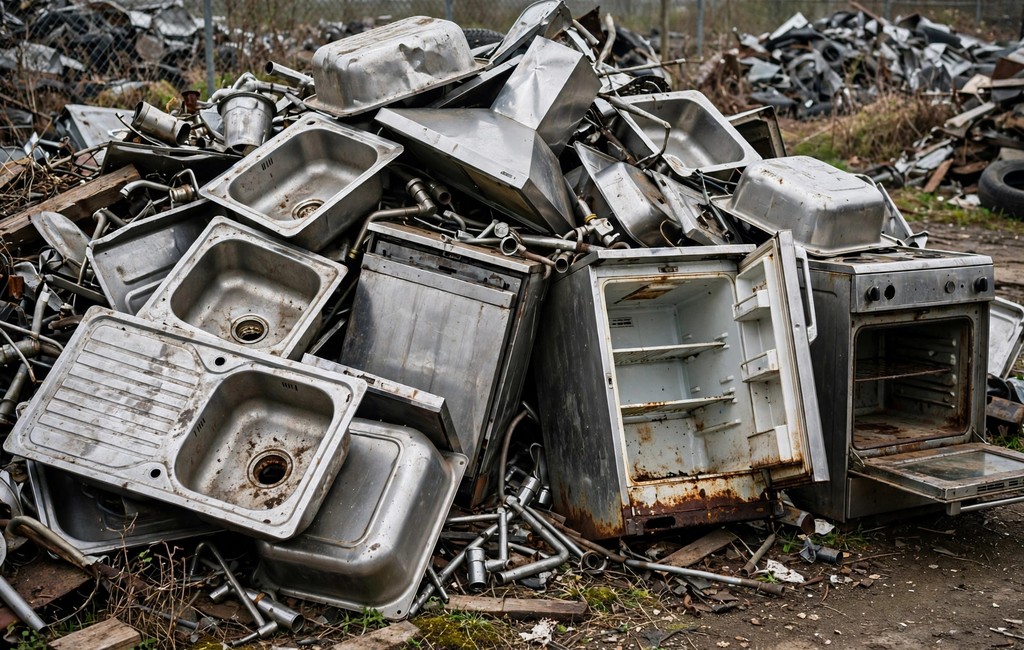
Restaurant equipment, brewery tanks, kitchen sinks, commercial appliances, and old cookware are good sources. When you remove a sink, check the underside for bonded insulation or a steel frame, since these will be sorted out or discounted. A quick look at the maker’s markings may also reveal the grade, as many industrial items are stamped.
Frequently asked questions
Is stainless steel scrap worth more than regular steel?
Yes. Stainless typically pays several times more per pound than ordinary carbon steel because of its chromium and nickel content.
Why does 316 pay more than 304?
316 contains molybdenum in addition to nickel, which makes it more corrosion resistant and more valuable in the recycling market.
Does a magnet prove steel is not stainless?
No. Some stainless grades, such as 430, are magnetic. A magnet helps sort grades but cannot prove a metal is not stainless.
What does SS mean in scrap listings?
It stands for stainless steel. Listings may also use grade numbers such as 304 or 316.
Do yards pay for stainless sinks?
Yes. Sinks are commonly 304 and widely accepted, though attached fittings and insulation can reduce the payout.
Put it to the test
Grab a magnet, test your stainless pile, and separate magnetic from non-magnetic pieces. Then call two local yards for their current posted rates on each grade. Tell us in the comments what you are trying to sell and we will help you work out the grade. Subscribe for more practical scrap price guides.