
How to Understand Fishing Rod Power and Action Before You Buy
Choosing the right fishing rod can feel overwhelming when you’re faced with technical terms like power ratings and action classifications. These specifications aren’t just marketing jargon. They directly affect how your rod performs on the water and whether you’ll successfully land the fish you’re targeting.
Understanding these concepts before making a purchase saves you money and frustration. The wrong rod makes fishing harder than it needs to be. Additionally, knowing what these terms mean helps you match your equipment to your fishing style and target species. This guide breaks down everything you need to know about rod power and action in simple, practical terms.
What Rod Power Really Means
Rod power describes how much force is required to bend the rod. Think of it as the rod’s backbone or its resistance to bending under load. This characteristic determines what size fish you can effectively fight and what lure weights you can cast.
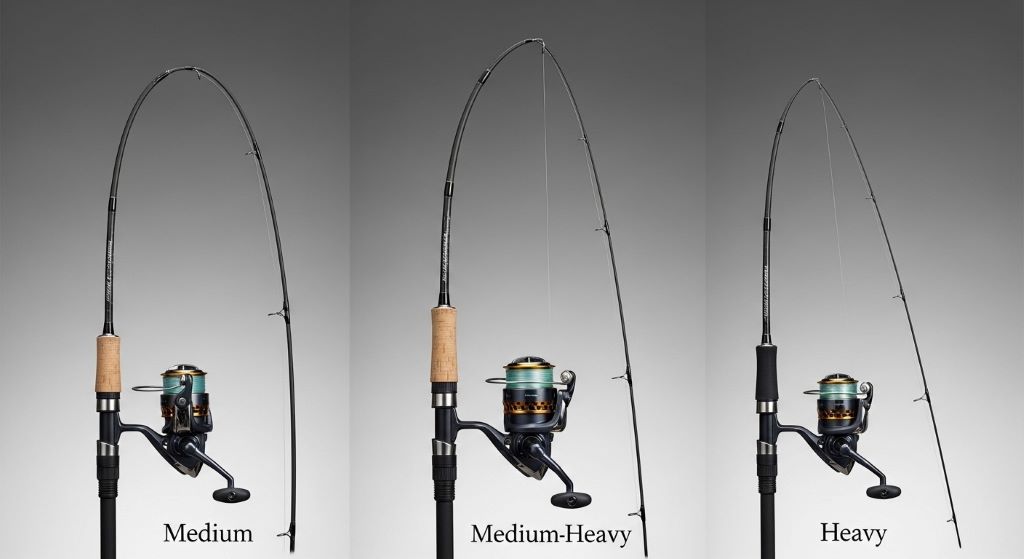
Manufacturers typically classify power on a scale ranging from ultra-light to extra heavy. Each category serves different fishing situations and target species. An ultra-light rod bends easily with minimal pressure, making it perfect for small panfish. Conversely, an extra heavy rod requires significant force to bend and is designed for large, powerful fish.
The power rating directly impacts your fishing experience. A rod that’s too light for your target fish will bend too much, giving you little control during the fight. Meanwhile, a rod that’s too heavy won’t bend enough to absorb the fish’s runs, potentially resulting in broken lines or torn hooks.
Your choice of lures and baits also depends on rod power. Lighter rods cast small lures effectively but struggle with heavier weights. Heavier rods handle big baits easily but lack the sensitivity needed for finesse presentations.
Breaking Down the Power Categories
Understanding each power category helps you make informed decisions. Let’s explore what each classification offers and when to use it.
Ultra-light rods work best for tiny jigs, small spinners, and lightweight baits. They’re ideal for panfish, small trout, and other species under two pounds. These rods provide maximum sensitivity, letting you feel the lightest bites.
Light power rods step up slightly in strength. They handle fish in the one to four pound range comfortably. These rods excel with small crankbaits, lightweight soft plastics, and finesse techniques. Many anglers choose light rods for trout, crappie, and small bass.
Medium power rods offer versatility for various fishing situations. They balance sensitivity with enough backbone to handle larger fish. This category works well for bass fishing with moderate-sized lures and can handle fish up to eight pounds effectively.
Medium heavy rods provide more power while maintaining reasonable sensitivity. This category suits anglers targeting larger bass, walleye, and similar species. These rods handle heavier lures and provide the backbone needed to pull fish from cover.
Heavy and extra heavy rods are specialized tools for big fish and tough conditions. They’re designed for muskie, pike, large catfish, and saltwater species. These rods sacrifice sensitivity for raw power and durability.
Understanding Rod Action Fundamentals
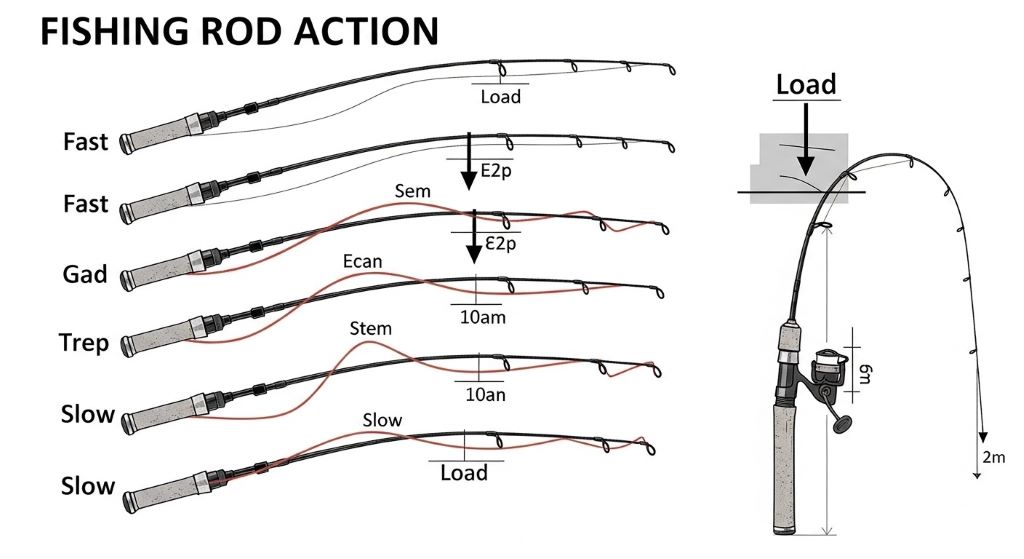
While power describes overall strength, action refers to where the rod bends along its length. This characteristic affects casting accuracy, hook-setting ability, and how the rod loads during a cast. Therefore, action is equally important when selecting a rod.
A fast action rod bends primarily in the top third of the blank. The majority of the rod remains relatively stiff. This design provides quick tip response and excellent sensitivity. Fast action rods excel at detecting subtle bites and setting hooks with treble-hooked lures.
Moderate action rods bend through the top half of the blank. They offer a balance between sensitivity and forgiveness. This flexibility helps absorb sudden runs and reduces the chance of pulling hooks out during the fight.
Slow action rods bend throughout their entire length, creating a parabolic curve under load. These rods provide maximum forgiveness and are excellent for fighting fish on light line. However, they sacrifice some sensitivity and hook-setting power.
The action you choose affects your entire fishing experience. Fast action rods provide better feel and accuracy but require more skill to avoid pulling hooks. Slower actions are more forgiving but may not provide the feedback you need for certain techniques.
How Power and Action Work Together
Power and action aren’t independent characteristics. They work together to define your rod’s performance. Understanding this relationship helps you select the perfect combination for your needs.
Consider a medium heavy rod with fast action. This combination provides good backbone for larger fish while maintaining sensitivity in the tip. It’s an excellent choice for techniques requiring both power and feel, such as jigging or fishing soft plastics.
Alternatively, a medium power rod with moderate action offers a more forgiving setup. This combination works wonderfully for crankbaits and treble-hooked lures where you want the rod to absorb the fish’s movements and reduce the chance of pulling hooks.
Matching these characteristics to your target species is crucial. Smallmouth bass in rocky areas might require a fast action rod for quick hook sets, while largemouth in heavy cover might need more power with moderate action for pulling fish out.
Your casting style also matters. Fast action rods generally cast more accurately because less of the rod participates in the cast. However, they require better timing. Moderate action rods are more forgiving for beginners but might sacrifice some accuracy.
Reading and Using a Rod Action Chart
A rod action chart visually represents how different rods bend under load. These charts help you understand what to expect from various action ratings. Most quality manufacturers provide these charts in their catalogs or websites.
These charts typically show rod profiles under different loads. You’ll see illustrations of how far each action type bends and where the flex point occurs. This visual representation makes it easier to understand the differences between actions.
However, charts aren’t standardized across manufacturers. One company’s fast action might be another’s moderate-fast. This inconsistency means you should compare rods within the same brand or physically test rods when possible.
Use these charts as starting points rather than absolute guides. They help narrow your choices but shouldn’t replace hands-on evaluation. If you’re shopping online, look for detailed specifications and customer reviews that describe actual performance.
Many anglers find it helpful to create their own mental reference points. Once you fish with a rod you like, remember its specifications. This benchmark helps you compare other rods and understand how different ratings might perform.
Consulting a Rod Strength Guide for Your Needs
A comprehensive rod strength guide takes into account both power and action, providing recommendations based on fishing situations. These guides help match equipment to specific techniques and target species.
When consulting any guide, consider your primary fishing environment. Lakes, rivers, and saltwater environments present different challenges. A rod perfect for clear water bass fishing might be inadequate for fighting fish in heavy current.
Think about the techniques you use most often. Different presentations require different rod characteristics. Topwater fishing demands different qualities than bottom-bouncing or vertical jigging. Your rod should excel at your preferred methods.
Consider the average size of your target fish. While it’s tempting to buy a heavy rod for those occasional giants, you’ll enjoy fishing more with a rod matched to the fish you catch most often. Additionally, using appropriate tackle makes the fight more sporting and enjoyable.
Don’t forget about your physical comfort. A rod that feels good in your hand and doesn’t fatigue you during long fishing sessions is important. Even the perfectly rated rod won’t serve you well if it’s uncomfortable to use all day.
Practical Examples for Common Fishing Scenarios
Let’s examine specific situations to see how power and action choices affect your success. These examples illustrate how theoretical knowledge translates to real-world applications.
For bass fishing with plastic worms in moderate cover, many anglers choose a medium heavy rod with fast action. This combination provides the sensitivity to detect subtle bites while offering enough power to drive hooks home and muscle fish away from structure.
When fishing crankbaits for bass or walleye, a moderate action rod works better. The rod’s flex helps keep treble hooks pinned during the fight. A medium power rating handles most crankbait sizes effectively while providing the give needed to prevent pulled hooks.
Trout fishing in streams typically calls for lighter tackle. A light power rod with moderate action provides enough strength for typical trout while maintaining the delicacy needed for small lures and light line. This setup also makes one-pound trout feel like trophies.
Pike and muskie anglers need heavy power rods with fast action. These fish require powerful hook sets to penetrate their bony mouths. The heavy power also provides the muscle needed to control these aggressive fighters and handle large lures.
Saltwater inshore fishing for redfish or snook often requires medium heavy to heavy power with fast action. These fish fight hard and often near structure. You need power to control them while maintaining enough sensitivity to detect strikes.
Testing Rods Before You Buy
Whenever possible, physically evaluate rods before purchasing. This hands-on approach reveals details that specifications can’t convey. Even experienced anglers benefit from testing equipment.
Hold the rod at the reel seat in a natural fishing position. Does it balance well? The weight distribution affects comfort during extended use. A rod that feels tip-heavy will tire your wrist and forearm quickly.
Wiggle the rod gently to feel how it loads and recovers. Fast action rods snap back quickly with minimal wobble. Slower actions have more pronounced movement that takes longer to settle. This simple test reveals a lot about the rod’s responsiveness.
If the store allows it, attach a reel and make a few practice casts. This gives you the best sense of how the rod performs. Pay attention to how easily it loads, how smoothly it releases, and whether the action feels comfortable for your casting style.
Check the guide alignment and quality. Guides should line up perfectly when you sight down the rod. Quality guides with smooth interiors protect your line and improve casting performance. Additionally, examine the finish and construction for signs of quality craftsmanship.
Ask store staff about their experiences with different models. Many fishing tackle retailers are passionate anglers themselves. Their firsthand knowledge can provide insights beyond manufacturer specifications.
Common Mistakes When Choosing Rod Power and Action
Many anglers make predictable errors when selecting rods. Avoiding these mistakes helps you choose equipment that truly serves your needs.
Buying based solely on price is a frequent mistake. While budget matters, the cheapest rod rarely provides the best value. Conversely, the most expensive rod isn’t always necessary. Focus on finding quality within your budget that matches your needs.
Overestimating the fish you’ll catch leads many to buy rods that are too heavy. Using oversized tackle reduces your catch rate and enjoyment. Most fish are smaller than we hope. Therefore, choosing equipment for realistic targets makes more sense.
Copying someone else’s setup without understanding why they made those choices often leads to disappointment. What works for a tournament pro might not suit your fishing style or local conditions. Make informed decisions based on your specific situation.
Ignoring technique-specific requirements causes problems. Each fishing method has ideal rod characteristics. Using a flipping stick for finesse fishing or a spinning rod for heavy cover work compromises your effectiveness.
Failing to balance your entire setup creates issues. Your rod, reel, and line should work together harmoniously. A heavy power rod with an undersized reel and light line doesn’t make sense. Similarly, heavy line on a light power rod limits casting distance and sensitivity.
Maintaining Your Investment
Once you’ve selected the right rod, proper care ensures it performs well for years. Maintenance is straightforward but often overlooked.
Rinse your rod with fresh water after every fishing trip, especially after saltwater use. Salt and debris can damage guides and corrode components. A gentle rinse removes harmful materials and extends your rod’s life.
Store rods properly to prevent warping and damage. Vertical storage in a rod rack works well. If you must store rods horizontally, ensure they’re supported at multiple points. Never lean rods in corners where they’ll develop bends.
Inspect guides regularly for cracks or rough spots. Damaged guides can fray or break your line. If you notice any issues, replace guides promptly. This simple maintenance prevents more serious problems.
Check the reel seat periodically to ensure it’s tight. Loose reel seats affect performance and can damage your reel. Most seats can be tightened with basic tools. Additionally, verify that decorative wraps and coatings remain intact.
Transport rods in protective cases or tubes, especially when traveling. A broken rod ruins fishing trips. Quality rod cases aren’t expensive considering the protection they provide.
Making Your Final Decision
After learning about power and action, you’re ready to make an informed choice. However, synthesizing all this information into a decision requires one final consideration of your priorities.
List your top three fishing situations. Whether it’s bass fishing in local ponds, trout fishing in streams, or pier fishing for whatever bites, identify your most common scenarios. Your rod should excel in these situations.
Determine your budget range and stick to it. Quality rods exist at every price point. Research options within your budget and read reviews from anglers who fish similar conditions. Online fishing communities provide valuable real-world feedback.
Consider starting with versatile options if you’re building a collection. A medium power rod with moderate-fast action handles many situations reasonably well. As you gain experience, you can add specialized rods for specific techniques.
Remember that rod selection is somewhat personal. What feels perfect to another angler might not work for you. Trust your instincts when a rod feels right in your hands, even if it’s not what everyone recommends.
Plan to grow with your equipment. As your skills develop, your preferences will evolve. The rod that’s perfect today might not be your favorite in a year. That’s natural and part of developing as an angler.
Conclusion
Understanding fishing rod power and action transforms rod shopping from confusing to confident. Power describes the rod’s overall strength and determines what fish size and lure weights you can handle effectively. Action defines where the rod bends, affecting sensitivity, casting, and fighting characteristics.
These two features work together to create your rod’s personality. A medium heavy rod with fast action serves different purposes than the same power with moderate action. Matching these characteristics to your fishing style, target species, and techniques ensures satisfying days on the water.
Using resources like a rod action chart and rod strength guide helps narrow your choices, but nothing replaces hands-on evaluation. Test rods when possible, ask experienced anglers for advice, and consider your most common fishing scenarios when making decisions.
Avoid common mistakes like buying solely based on price or choosing rods for fish you rarely encounter. Instead, focus on equipment that matches your realistic needs and makes your typical fishing more enjoyable and successful.
With this knowledge, you’re prepared to select rods that truly enhance your fishing experience. Take your time, consider your specific needs, and choose equipment that will serve you well for seasons to come.
Frequently Asked Questions
What’s the difference between a medium and medium heavy rod?
A medium heavy rod requires more force to bend and handles heavier lures and larger fish than a medium rod. Medium rods typically work well for fish up to eight pounds with lures in the quarter to five-eighths ounce range. Medium heavy rods handle fish up to twelve pounds and lures from three-eighths to one ounce. The heavier rating provides more backbone for pulling fish from cover.
Can I use the same rod for different fishing techniques?
While versatile rods exist, no single rod excels at everything. A medium power rod with moderate-fast action handles multiple techniques reasonably well, making it a good choice for anglers who use various methods. However, specialized techniques like flipping heavy cover or fishing finesse presentations perform better with purpose-built rods designed for those specific applications.
How do I know if my rod is too stiff or too flexible?
If your rod doesn’t bend much during casts or fights, it’s probably too stiff for your application. You’ll have trouble casting lighter lures and may pull hooks during fights. If your rod bends excessively with normal-sized lures or you can’t control hooked fish effectively, it’s too flexible. The right rod loads smoothly during casts and provides good feel without bending excessively.
Do more expensive rods really make a difference?
Higher-priced rods typically use better materials like higher-modulus graphite, which creates lighter, more sensitive blanks. They also feature better components and construction quality. However, the performance difference between mid-range and premium rods is less dramatic than between budget and mid-range options. For most anglers, mid-priced rods offer excellent performance and durability.
Should beginners start with specific power and action ratings?
New anglers benefit from versatile, forgiving equipment. A medium power rod with moderate action works well for learning because it handles various situations adequately and forgives casting and fighting mistakes. As you develop skills and preferences, you can add more specialized rods to your collection. Starting with one versatile rod lets you discover what you enjoy before investing in specialized equipment.
Related Topics:
How Long Casting Surf Rods Improve Shore Fishing Success