
How to Use an Air Pump in a Planted Aquarium Without Losing CO2
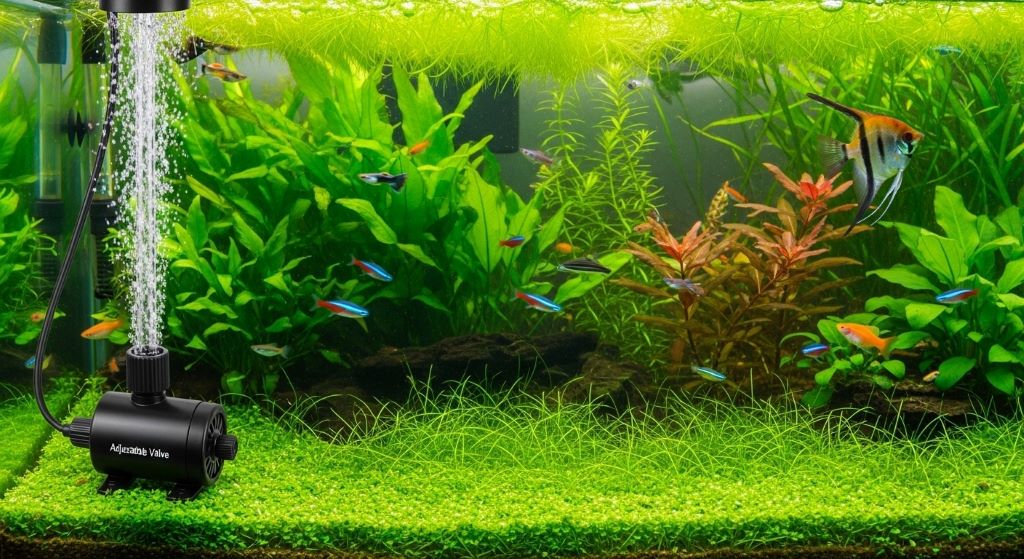
Maintaining a thriving planted aquarium requires a delicate balance between providing adequate oxygen for fish and preserving carbon dioxide for plant growth. Many aquarists wonder whether running an air pump will diminish their CO2 levels and harm their carefully cultivated aquatic plants. The good news is that you can successfully use an air pump while maintaining healthy CO2 levels through strategic timing and proper techniques.
Understanding how oxygen and carbon dioxide interact in your aquarium ecosystem is fundamental to creating an environment where both fish and plants flourish. While these two gases serve different purposes, managing them doesn’t have to be a challenge. This comprehensive guide will help you navigate the complexities of aeration in planted tanks without sacrificing the benefits of CO2 injection.
Understanding the Relationship Between Oxygen and Carbon Dioxide
Aquarium water naturally holds dissolved gases that are essential for aquatic life. During daylight hours, plants absorb carbon dioxide and release oxygen through photosynthesis. Conversely, at night, this process reverses as plants consume oxygen and release CO2, similar to fish respiration.
The concern about using air pumps stems from their effect on gas exchange at the water surface. When bubbles rise and break the surface, they create turbulence that accelerates the release of dissolved gases into the atmosphere. Since CO2 is more soluble in water than oxygen, it escapes more readily when surface agitation increases.
However, this doesn’t mean air pumps are incompatible with planted aquariums. The key lies in understanding when and how to use aeration without undermining your CO2 supplementation efforts. Many successful aquascapers incorporate air pumps into their setups by following specific strategies that protect their investment in plant health.
The Importance of Timing Your Air Pump Operation
Strategic timing represents the most effective approach to using an air pump in a planted tank. Running your air pump only during specific periods allows you to provide necessary oxygenation without constantly depleting carbon dioxide levels throughout the day.
The overnight period presents the ideal window for air pump operation. After your aquarium lights turn off, plants stop photosynthesizing and begin consuming oxygen instead of producing it. Meanwhile, fish continue their constant oxygen demand. This combination can lead to dangerously low oxygen levels before morning, particularly in heavily stocked or densely planted aquariums.
By activating your air pump one hour before lights-out and running it until an hour after lights-on, you ensure adequate oxygenation during this critical period. This timing allows CO2 levels to rebuild naturally during the day when plants actively use it for growth. Additionally, you maintain stable oxygen levels overnight when both plants and fish compete for this essential gas.
Using a simple timer makes this approach effortless and consistent. Set your air pump to turn on automatically each evening and shut off each morning, creating a reliable routine that supports both plant and fish health without manual intervention.
Optimizing Surface Agitation Control
The degree of water movement at your aquarium’s surface directly influences gas exchange rates. Therefore, controlling surface agitation becomes crucial when balancing oxygen provision with CO2 retention in your planted aquarium setup.
Gentle surface movement allows some gas exchange while minimizing CO2 loss. You can achieve this balance by adjusting your air pump’s output using a valve or selecting a pump with variable flow settings. Start with minimal airflow and gradually increase it only if oxygen levels prove insufficient for your fish population.
Positioning your air stone or diffuser also affects how much CO2 escapes. Placing the air source near the bottom of your tank, but not directly under CO2-sensitive plants, creates circulation without excessive surface turbulence. The bubbles will still rise and provide oxygenation, yet the gentler surface disruption helps preserve more dissolved CO2.
Another effective technique involves directing your filter output downward rather than creating surface ripples. This approach maintains water circulation and prevents stagnant areas while reducing the CO2-depleting effects of aggressive surface agitation. Many experienced aquarists use this method in combination with carefully timed air pump operation.
Assessing Your Planted Tank Oxygen Needs
Not every planted aquarium requires supplemental aeration. Understanding your specific setup helps determine whether you need an air pump at all, or how frequently you should run one.
Lightly stocked tanks with abundant fast-growing plants typically produce sufficient oxygen during photoperiod hours. The oxygen released through photosynthesis often exceeds what fish consume, creating naturally well-oxygenated conditions. In these situations, you might only need air pump assistance during the night or during particularly warm weather when water holds less dissolved gas.
Conversely, heavily stocked aquariums or those with predominantly slow-growing plants may require more consistent aeration support. Fish populations that exceed general stocking guidelines consume oxygen faster than plants can replenish it, necessitating mechanical assistance to maintain safe dissolved oxygen levels.
Temperature also plays a significant role in oxygen availability. Warmer water holds less dissolved oxygen than cooler water, so summer months or tropical setups may demand more aggressive aeration strategies. Monitoring your fish for signs of oxygen deprivation, such as gasping at the surface, helps you identify when supplemental aeration becomes necessary.
Alternative Oxygenation Methods for Planted Aquariums
Beyond traditional air pumps, several alternative approaches can boost oxygen levels while minimizing impact on your carefully maintained CO2 balance in planted tanks.
Installing a spray bar on your filter output creates gentle surface movement without the vigorous agitation that air stones produce. This method provides adequate gas exchange for many setups while being less disruptive to dissolved CO2 concentrations. Position the spray bar just below the surface, angling it slightly downward to avoid creating excessive turbulence.
Powerheads or circulation pumps offer another option for maintaining water movement without forcing atmospheric gas exchange. These devices keep water circulating throughout your aquarium, preventing dead zones where oxygen becomes depleted. However, they don’t create the surface disruption that drives CO2 out of solution.
Additionally, regular water changes naturally replenish dissolved oxygen while removing waste products. Fresh tap water typically contains higher oxygen concentrations than your aquarium water, providing a periodic boost without the need for continuous aeration. This benefit gives you another reason to maintain your regular maintenance schedule.
Some aquarists successfully use wavemakers on intermittent schedules, creating periodic water movement without constant surface agitation. This approach can work well in larger aquariums where creating varied flow patterns benefits both plant growth and fish health.
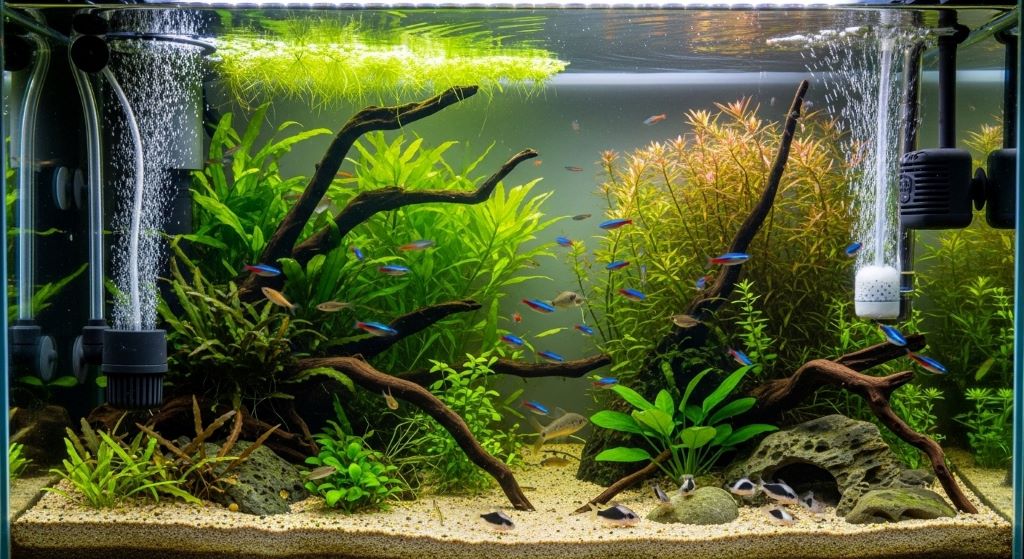
Maximizing CO2 Efficiency in Aerated Tanks
When you must run an air pump during periods when CO2 injection is active, several strategies help maximize the efficiency of your CO2 supplementation system.
Increasing your CO2 injection rate compensates for losses due to surface agitation. While this requires using more CO2, it ensures your plants receive adequate carbon for optimal growth despite increased off-gassing. Monitor your drop checker or pH levels to verify that you’re maintaining target CO2 concentrations throughout the photoperiod.
Installing a CO2 reactor or inline diffuser improves dissolution efficiency compared to standard in-tank diffusers. These devices maximize contact time between CO2 and water, helping more gas dissolve before it can escape at the surface. This enhanced efficiency means less CO2 waste even when running an air pump.
Creating a CO2 distribution strategy that targets the substrate level rather than the upper water column also helps. Since CO2 is denser than water when first injected, positioning your diffuser low in the tank allows plants to absorb it before surface agitation drives it out. This approach works particularly well with carpet plants and other species that grow near the bottom.
Finally, consider using liquid carbon supplements as a complement to gaseous CO2 injection. Products containing glutaraldehyde provide an alternative carbon source that doesn’t escape through surface agitation. While not a complete replacement for CO2 injection, they can help maintain plant health when balancing oxygenation needs.
Monitoring and Adjusting Your System
Successful integration of air pumps into planted aquariums requires ongoing observation and willingness to adjust your approach based on what you observe.
Invest in a dissolved oxygen test kit to measure actual oxygen levels rather than relying on guesswork. Testing at different times of day reveals patterns that inform your aeration schedule. You might discover that your tank maintains adequate oxygen with less air pump operation than you initially thought necessary.
Similarly, monitor CO2 levels using a drop checker or pH/KH relationship charts. If your measurements indicate that CO2 concentrations drop too low during hours when your air pump runs, you’ll need to adjust timing, reduce airflow, or increase CO2 injection rates accordingly.
Watch your plants and fish for behavioral cues about environmental conditions. Plants that develop yellowing leaves or slow growth may indicate insufficient CO2, while fish gasping at the surface signal oxygen deficiency. These visual indicators help you fine-tune your system between formal testing sessions.
Keep detailed records of your settings, including air pump run times, CO2 injection rates, and any adjustments you make. This documentation helps you identify successful configurations and troubleshoot problems when they arise. Over time, you’ll develop an intuitive understanding of your specific aquarium’s needs.
Selecting the Right Air Pump for Your Setup
Choosing appropriate equipment makes balancing oxygenation and CO2 retention significantly easier. Not all air pumps offer the same features or performance characteristics.
Variable output pumps provide the flexibility to adjust airflow precisely to your needs. This adjustability allows you to find the sweet spot where you provide adequate oxygenation without creating excessive surface agitation control problems. Models with built-in flow adjustment knobs eliminate the need for separate valve accessories.
Quiet operation becomes important if your aquarium resides in a living space or bedroom. Modern air pumps vary considerably in noise levels, with some producing barely audible operation while others create disruptive humming sounds. Reading reviews and choosing reputable brands helps ensure you select a pump you can tolerate running during the night.
Consider the size and power requirements of different models relative to your tank volume. Oversized pumps create more agitation than necessary, while undersized units may fail to provide adequate oxygenation. Match your pump capacity to your aquarium’s specific needs rather than simply choosing the most powerful option available.
Battery backup air pumps offer insurance against power outages that could otherwise lead to oxygen depletion disasters. While not essential for every setup, they provide peace of mind, particularly for heavily stocked tanks or those in areas prone to electrical disruptions.
Conclusion
Successfully using an air pump in a planted aquarium while maintaining healthy CO2 levels is entirely achievable through strategic planning and careful management. The key principles involve timing your air pump operation to coincide with periods when plants aren’t actively photosynthesizing, controlling surface agitation to minimize unnecessary gas exchange, and monitoring your system to ensure both adequate oxygenation and sufficient carbon dioxide for plant growth.
Remember that every aquarium presents unique challenges based on stocking levels, plant density, and environmental conditions. Start with conservative aeration approaches and adjust based on observed results rather than attempting to follow rigid formulas. Through patient observation and thoughtful adjustments, you can create an environment where fish receive the oxygen they need while plants thrive with optimal CO2 availability.
The investment in proper equipment, including timers and monitoring tools, pays dividends in the form of healthy fish and lush plant growth. By understanding the science behind gas exchange and implementing the strategies outlined in this guide, you’ll master the art of balancing these essential elements in your aquatic ecosystem.
Frequently Asked Questions
Will running an air pump during the day completely eliminate my injected CO2?
Running an air pump during photoperiod hours will significantly reduce CO2 concentrations but won’t eliminate them entirely. However, this reduction often brings levels below the optimal range for plant growth. That’s why most planted tank enthusiasts run air pumps only at night when plants don’t need CO2 anyway.
How can I tell if my fish need more oxygen at night?
Watch for fish gathering near the surface during early morning hours, gasping or breathing rapidly, or appearing lethargic after lights-on. These behaviors indicate overnight oxygen depletion. Testing dissolved oxygen levels first thing in the morning provides objective confirmation of whether nighttime aeration is necessary.
Can I use a sponge filter instead of an air stone in my planted tank?
Sponge filters work well in planted aquariums and offer the advantage of biological filtration alongside oxygenation. They create gentler surface agitation than air stones while still providing adequate gas exchange. Run them on the same nighttime schedule as you would a standard air pump.
Do I need an air pump if I have a spray bar creating surface movement?
Many planted tanks achieve adequate oxygenation through spray bar surface agitation alone without needing an air pump. Test your oxygen levels during the lowest point, typically just before morning lights-on, to determine whether your spray bar provides sufficient aeration or whether supplemental help is necessary.
How much does using an air pump increase my CO2 consumption?
The increase varies depending on airflow rate and duration, but expect to use approximately fifteen to thirty percent more CO2 when running an air pump during injection hours. By limiting air pump operation to nighttime only when CO2 injection is off, you avoid this additional consumption entirely.
Related Topics:
Upgrade Your Kitchen: Electric Motors for Manual Pasta Rollers Compared
Criteria That Set the Best Nashville Heating and Cooling Teams Apart