
Complete Toner Cartridge Buying Guide for Small Businesses
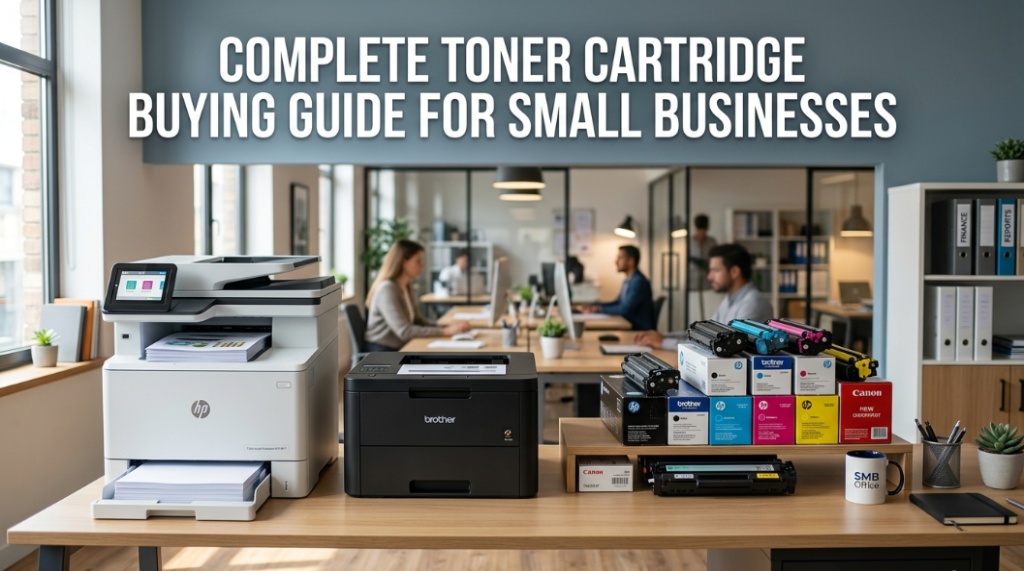
Printing remains essential for many small businesses, even in a digital-first world. Studies show that offices still rely heavily on printed contracts, invoices, training materials, and reports every day. However, toner costs can quickly become a hidden expense when businesses choose the wrong cartridges or printers. Many companies spend up to 3% of their annual revenue on printing-related expenses without realizing it. This guide explains how to choose the right toner cartridges, reduce waste, improve print quality, and protect your business equipment with smarter buying decisions.
Why Toner Cartridge Selection Matters for Small Businesses
Small businesses often focus only on printer prices while ignoring long-term toner expenses. However, toner cartridges usually account for the largest part of office printing costs over time. Choosing the correct cartridge helps reduce downtime, improve print consistency, and avoid unnecessary repairs. In addition, reliable toner improves workflow efficiency because employees spend less time fixing printing problems.
Modern offices also use specialized equipment alongside laser printers for shipping, labeling, and operations. Businesses that manage packaging and logistics can improve efficiency by understanding thermal label printer setup and usage for faster inventory management and shipping processes. Combining efficient toner management with organized labeling systems creates smoother office operations. As a result, businesses save both time and money across multiple departments.
Many small companies underestimate how poor-quality toner affects brand image. Faded text, smudged invoices, and streaky presentations can reduce professionalism during client interactions. Moreover, unreliable cartridges may leak powder inside printers and cause expensive maintenance issues. Smart toner buying decisions help maintain strong document quality while keeping operating costs predictable.
Understanding the Different Types of Toner Cartridges
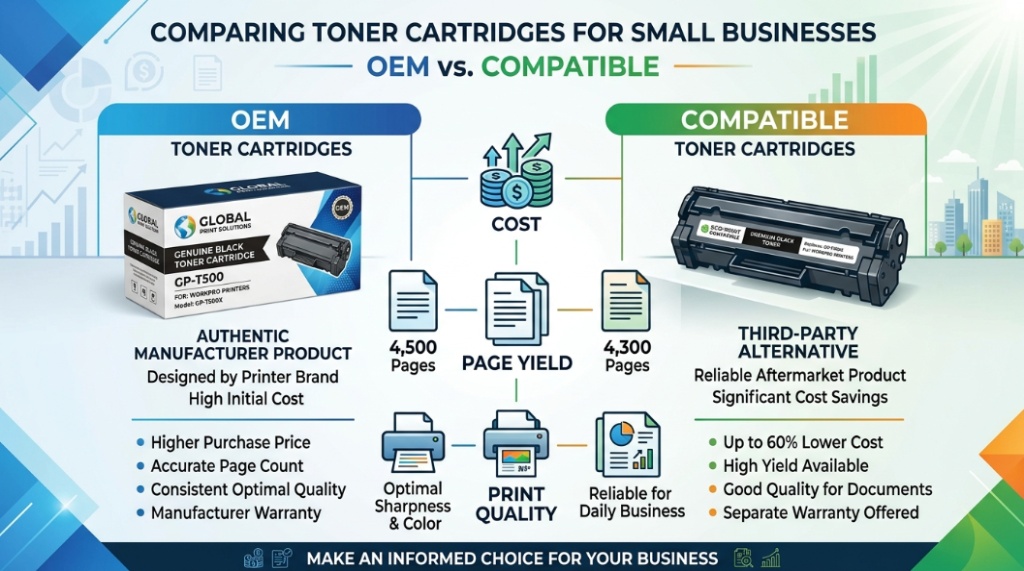
Toner cartridges come in several categories, and each option offers different advantages. OEM cartridges come directly from printer manufacturers and usually provide the most reliable performance. Compatible cartridges come from third-party manufacturers and often cost significantly less than branded alternatives. Remanufactured cartridges use recycled OEM shells that manufacturers refill and rebuild for reuse.
OEM Toner Cartridges
OEM cartridges work best for businesses that prioritize maximum print quality and minimal technical issues. Manufacturers design these cartridges specifically for their printer models, which improves compatibility and reliability. Additionally, OEM products usually provide better page consistency and lower risk of toner leakage. However, these cartridges often cost much more than third-party alternatives.
Compatible Toner Cartridges
Compatible cartridges attract many small businesses because they lower printing expenses substantially. High-quality compatible cartridges can deliver excellent performance when purchased from reputable suppliers. However, poor-quality versions may create printing defects or damage printer components over time. Therefore, businesses should research seller reviews carefully before purchasing compatible products.
Remanufactured Toner Cartridges
Remanufactured cartridges support environmental sustainability while reducing office costs. Manufacturers clean, repair, and refill used OEM cartridges before selling them again. Many modern remanufactured cartridges perform surprisingly well for standard office tasks and internal documents. Nevertheless, businesses should test a small batch first before switching completely.
How to Calculate the Real Cost of Toner
Many businesses focus only on cartridge price instead of total printing value. A cheaper cartridge may actually cost more if it produces fewer pages or causes maintenance problems. Cost-per-page analysis helps companies compare toner options more accurately and make smarter decisions. This method divides cartridge cost by estimated page yield to calculate true printing expenses.
For example, a $120 cartridge producing 6,000 pages costs about two cents per page. Meanwhile, a $60 cartridge producing only 1,500 pages actually costs four cents per page. Therefore, the cheaper cartridge becomes more expensive in the long run. Businesses that print heavily should always prioritize yield efficiency over initial purchase price.
Another hidden expense involves printer downtime caused by unreliable toner products. Employees lose productivity when printers jam, streak, or fail during important projects. Additionally, emergency cartridge replacements often force businesses to pay higher rush-order shipping fees. Smart purchasing strategies help reduce these indirect operational costs significantly.
Choosing Toner Based on Business Printing Needs
Every business has different printing demands, so toner selection should match actual usage patterns. A law office printing contracts daily requires different cartridges than a small retail store printing occasional receipts. Understanding monthly print volume helps businesses avoid overspending or underestimating toner requirements. Furthermore, choosing the correct cartridge size reduces unnecessary inventory storage.
Businesses that frequently hold presentations or meetings may also improve productivity by using office projector stand solutions that create better workspace organization and smoother collaboration. Organized office equipment supports faster workflow alongside efficient printing systems. Consequently, businesses operate more professionally and reduce wasted employee time.
Low-Volume Printing Businesses
Small offices with occasional printing needs should avoid buying oversized toner cartridges. Toner powder can degrade over long periods if cartridges sit unused in poor storage conditions. Compact cartridges reduce waste and help maintain fresh toner quality for infrequent printing tasks. Moreover, smaller purchases improve cash flow management for growing businesses.
High-Volume Printing Businesses
Businesses printing hundreds or thousands of pages weekly should prioritize high-yield cartridges. These cartridges reduce replacement frequency and minimize employee interruptions during busy workdays. In addition, bulk purchasing programs often provide discounts for high-volume customers. Consistent high-yield usage also improves long-term cost forecasting for office managers.
Climate and Environmental Factors That Affect Toner Performance
Most toner buying guides ignore environmental conditions, but climate significantly affects cartridge performance. High humidity can cause toner clumping, poor adhesion, and smudged printouts in tropical regions. Meanwhile, extremely dry environments may increase static electricity and create paper feeding problems. Businesses should store toner in climate-controlled areas whenever possible.
Offices in coastal or humid regions should keep toner cartridges sealed until use. Moisture exposure can damage toner consistency and reduce print sharpness over time. Additionally, businesses should avoid storing cartridges near windows, heaters, or air conditioning vents. Stable room temperature helps maintain cartridge lifespan and print reliability.
Cold climates create different challenges for toner storage and printer operation. Toner cartridges exposed to freezing temperatures may produce faded or uneven prints after installation. Allowing cartridges to reach room temperature before use improves toner flow and print consistency. Therefore, businesses operating in colder regions should manage storage conditions carefully.
Signs of a Poor-Quality Toner Cartridge
Recognizing low-quality toner early helps businesses avoid equipment damage and wasted expenses. Streaks, faded areas, gray backgrounds, and toner dust around printed pages often indicate poor cartridge quality. Additionally, frequent printer error messages may signal compatibility problems with third-party products. Businesses should replace problematic cartridges immediately to prevent long-term printer issues.
Another warning sign involves unusual cartridge odors during printing operations. Strong chemical smells sometimes indicate poor manufacturing standards or low-grade toner powder composition. Cheap cartridges may also leak toner inside printers and contaminate internal components. Over time, these problems increase repair costs and reduce printer lifespan.
Reliable toner suppliers usually provide certifications, warranties, and quality guarantees for their products. Businesses should avoid unknown sellers offering extremely low prices without customer reviews or support policies. Investing slightly more in verified products often prevents larger operational expenses later. Careful supplier selection protects both printers and business productivity.
Best Practices for Toner Cartridge Storage
Proper toner storage extends cartridge life and maintains print quality for longer periods. Businesses should always store cartridges horizontally in their original sealed packaging. Upright storage may cause uneven toner distribution and affect printing consistency after installation. Furthermore, original packaging protects cartridges from moisture, sunlight, and dust contamination.
Office managers should rotate toner inventory regularly to avoid keeping cartridges unused for several years. Even sealed toner products can lose optimal performance if stored beyond recommended periods. Labeling purchase dates helps businesses track inventory freshness more efficiently. Organized storage systems also reduce accidental cartridge damage during handling.
Employees should handle cartridges carefully during installation and replacement procedures. Shaking cartridges aggressively can damage internal components or create uneven toner distribution. Instead, users should follow manufacturer instructions carefully when preparing cartridges for installation. Simple handling improvements often prevent unnecessary toner-related problems.

Why Page Yield Numbers Can Be Misleading
Most manufacturers calculate page yield using standardized testing with limited page coverage. Real-world business documents often contain logos, graphics, bold text, and charts that consume more toner. Therefore, actual page yield may differ significantly from advertised numbers in daily office use. Businesses should consider document complexity when estimating toner needs.
Color printing increases toner consumption much faster than standard black-and-white text printing. Marketing agencies, design firms, and retail businesses often experience higher toner usage because of image-heavy documents. Tracking real monthly printing behavior provides more accurate purchasing forecasts over time. Consequently, businesses avoid unexpected toner shortages and rushed purchases.
An uncommon but important factor involves font selection and document formatting. Certain fonts use significantly more toner because of thicker character structures and heavier spacing. Businesses printing thousands of pages monthly can reduce toner usage simply by switching to toner-efficient fonts like Century Gothic or Ecofont. Few companies realize how much typography choices influence long-term printing costs.
How Managed Print Services Help Small Businesses
Managed print services help businesses monitor toner usage, printer maintenance, and supply ordering more efficiently. These services automatically track printing activity and predict cartridge replacement schedules before shortages occur. Additionally, providers often negotiate lower toner prices through bulk purchasing agreements. Small businesses benefit from improved budgeting and reduced administrative workload.
Some managed print systems also provide security features that protect sensitive business documents. Secure printing prevents unauthorized access to financial reports, employee records, and client information. Moreover, usage analytics help managers identify wasteful printing habits within departments. Better visibility encourages smarter office printing behavior across teams.
Businesses should compare service contracts carefully before choosing managed print providers. Some providers lock customers into expensive long-term agreements with limited flexibility. Transparent pricing, reliable customer support, and flexible upgrade options create better long-term value. Careful contract review prevents unnecessary operational restrictions later.
Eco-Friendly Toner Practices for Modern Offices
Sustainability matters increasingly for both customers and business owners today. Recycling used toner cartridges reduces landfill waste and supports environmentally responsible business operations. Many manufacturers offer free cartridge return programs that simplify recycling for offices of all sizes. Additionally, recycled toner materials reduce demand for new plastic production.
Businesses can also reduce toner consumption by adjusting printer settings strategically. Draft mode printing uses less toner for internal documents and temporary reports. Duplex printing further reduces paper waste while lowering overall office expenses. Small adjustments across daily workflows create substantial long-term environmental benefits.
Employees should receive simple training about responsible printing habits and toner conservation strategies. Encouraging digital document sharing reduces unnecessary printing across departments. Furthermore, print quotas help businesses monitor excessive usage patterns more effectively. Sustainable printing policies improve both environmental impact and operational efficiency.
Conclusion
Choosing the right toner cartridge involves much more than comparing prices online. Small businesses must evaluate print volume, environmental conditions, cartridge quality, supplier reliability, and long-term operating costs before making purchasing decisions. Smart toner strategies improve print quality, reduce downtime, protect office equipment, and lower overall expenses. Businesses that combine efficient printing systems with organized office tools and workflow optimization create stronger daily productivity. Start reviewing your current printing habits today and invest in toner solutions that support long-term business growth while improving operational efficiency.
FAQs
How often should small businesses replace toner cartridges?
Businesses should replace cartridges when print quality declines or toner levels reach manufacturer warning limits.
Are compatible toner cartridges safe for printers?
High-quality compatible cartridges are generally safe when purchased from reputable suppliers.
What is the best way to store toner cartridges?
Store cartridges horizontally in sealed packaging within a cool and dry environment.
Do high-yield toner cartridges save money?
Yes, high-yield cartridges usually reduce cost-per-page and require fewer replacements.
Can humidity damage toner cartridges?
Yes, excessive humidity can cause toner clumping and poor print performance.