
How to Find Budget Curtains for Florida Windows
Living in Florida comes with unique window challenges. The intense year-round sun, high humidity, and sudden tropical storms can wreak havoc on standard window treatments, causing them to fade, warp, or mildew in record time. If you have tried searching for affordable options that can actually withstand these conditions, you have likely felt the frustration of finding cheap curtains that fall apart within a season or premium treatments that blow your budget. This guide is designed to solve that problem. We will walk you through exactly what to look for, what materials to avoid, and the best strategies for finding budget curtains for Florida windows that are durable, functional, and easy on your wallet.
Key Takeaways
- Not all cheap curtains are created equal; in Florida, fabric type matters more than style to ensure longevity.
- Ready-made polyester or polyester-blend curtains offer the best combination of affordability, UV resistance, and moisture resistance for the Florida climate.
- Strategic layering—using a budget sheer with a blackout liner—provides cost-effective light and heat control without expensive custom drapes.
- Shopping during post-holiday sales and utilizing online marketplace filters can significantly reduce the cost of high-quality thermal curtains.
- Avoid natural fibers like cotton and linen in high-humidity areas unless you are prepared to deal with shrinking and potential mold growth.
Why Florida Windows Destroy Regular Curtains
The average drape store might not understand the specific warzone that is a Florida window. It isn’t just about privacy; it is about survival. The primary difference lies in our three environmental factors: UV radiation, humidity, and heat gain.
High UV indexes in Florida cause natural fabrics to oxidize quickly. This leads to fading in the fabric and weakening of the structural integrity of the weave. Simultaneously, the 80–90% relative humidity in the summer months introduces moisture into the air, which cotton and linen easily absorb. This causes dimensional instability, leading to curtains shrinking and becoming wavy at the bottom. Finally, the heat gain is an economic concern. Dark, heavy drapes might block light, but if they retain heat, they force your AC to work harder.
The Humidity Trap
When looking for budget curtains for Florida windows, you must first check the fiber content. Synthetic fibers, specifically polyester, are hydrophobic. They do not absorb moisture from the air, meaning they won’t stretch, shrink, or harbor mildew spores. This is the single most important factor in choosing a curtain that lasts longer than six months in our climate.
Materials That Survive (And Those That Don’t)
To get the best value, you need to understand the science of the fabric. It is a common misconception that “thick” means durable. In Florida, a thick cotton drape is actually a death sentence because it acts like a sponge and a mold farm. Here is a breakdown of what to buy and what to skip.
Synthetic Blends: Your Best Friend
Your search for affordability should start and end with high-quality polyester, microfiber, or polyester-rayon blends. These materials offer several benefits specific to Florida:
- UV Resistance: Polyester is solution-dyed, meaning the color runs through the fiber. It resists fading significantly better than cotton.
- Dimensional Stability: It will not shrink when the humidity spikes, maintaining a crisp, straight hem.
- Mold Resistance: Synthetic fibers offer no food source for mold and mildew, making them ideal for bathrooms and kitchens.
When reading product labels, look for “100% Polyester” or “Polyester Blend.” Even a budget-friendly microfiber suede look is excellent for the climate because it is easy to vacuum and resists moisture.
Natural Fibers: The Risk
While 100% cotton and linen look luxurious, they are the worst choice for budget-conscious Florida homeowners. The price point may be low, but the lifespan is short. Natural fibers are highly absorbent. In the humid summer months, bottom hems will pick up moisture and drag on the floor. Over time, the fabric will yellow and develop a musty odor that requires aggressive washing to remove—washing which often causes shrinkage. Avoid these unless they are lined with a synthetic backing.
Balancing Light Control and Energy Bills
Florida sun is intense. But the solution isn’t always a massive blackout curtain, which can actually make a room feel like a cave and retain trapped heat. The most effective budget strategy is layering. This involves buying two sets of budget curtains rather than one expensive custom set.
This layering approach allows you to let light in during the cooler morning hours and block the brutal heat during peak afternoon sun, all while staying budget-friendly.
The “Sheer + Blackout” Layer Method
Here is a step-by-step approach to maximizing the energy efficiency of your window without spending on motorized or thermal-backed luxury drapes:
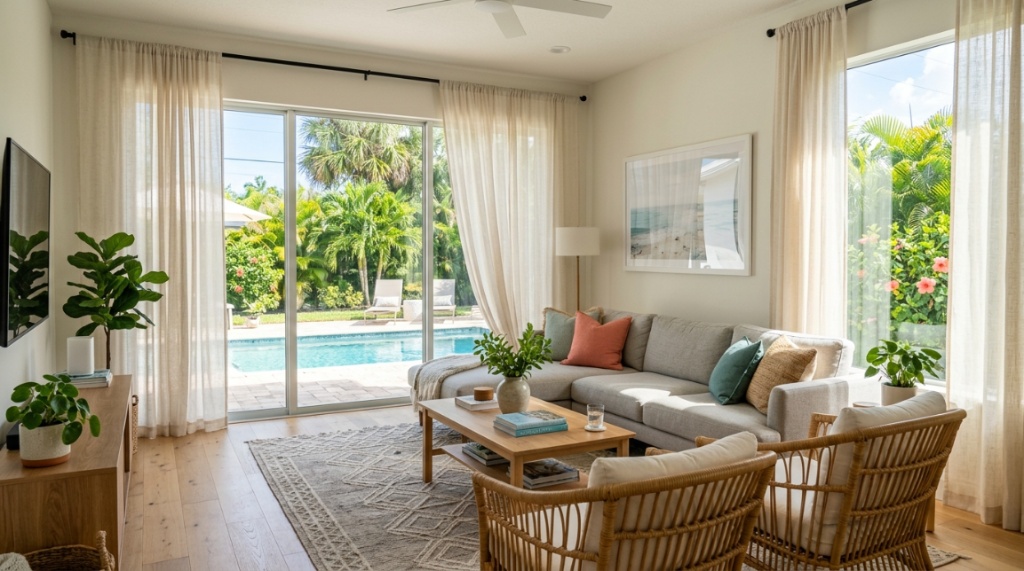
- Start with a white or light-colored sheer polyester curtain. This acts as a UV diffuser. It allows natural light to fill the room while protecting your furniture from UV fade during the day.
- Hang a thermal blackout curtain on top. Choose a rod that allows the outer curtain to pull back fully. Look for blackout curtains with a “triple weave” technology rather than a chemical foam backing, as the foam coating tends to crack and deteriorate in the heat.
- Reverse the schedule: During the day, keep the blackout panel open to reflect heat, but keep the sheer closed to filter light. This prevents the greenhouse effect inside the room.
This method provides up to 50% more energy efficiency than a single heavy curtain because it creates a dead air space between the two layers, acting as an insulator.
Where to Shop for Cheap But Durable Options
Finding the deals requires knowing where to look. Avoid boutique curtain shops and focus on mass-market retailers and online marketplaces where volume keeps prices low.
Online Marketplaces and Filters
When shopping online, do not just sort by “lowest price.” Use the filter functions specifically to search for “Thermal” and “Polyester.” On sites like Amazon or Wayfair, look for options with “Blackout” in the title but check the reviews to ensure the panels are not stiff or chemically smelling. Look for the following descriptive tags:
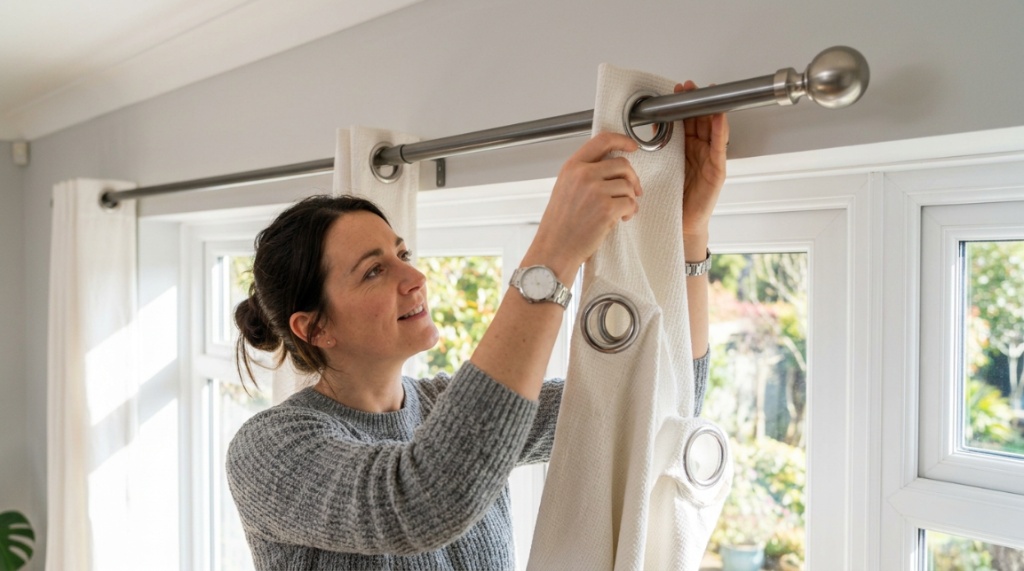
- Grommet Top (easier to open and close)
- Thermal Weave (better insulation)
- Wrinkle-Resistant (saves ironing time)
Shopping this way ensures you don’t waste money on decorative pieces that offer no functional benefit for the Florida sun.
Outlet and Clearance Sections
Physical big-box stores often put their seasonal “warm” colors (darker browns and reds) on clearance in the spring to make room for summer whites. Since these dark colors are great for solar absorption and privacy, purchasing them out of season at a steep discount is a smart move. Additionally, inspect the craftsmanship of cheaper panels—ensure the stitching of the rod pocket is secure, as cheap tension rods combined with heavy polyester can cause the fabric to rip if the seam is poor, To explore more styling options for unique entryways, check out our guide on Curtains for French Doors: The Ultimate Guide to Style and Function to find matching designs for your home.
Installation Tricks to Maximize Efficiency
You can purchase the cheapest curtain on the market, but if you hang it incorrectly, you will still lose the battle against the climate. The installation is where you can secure a major competitive advantage in cost-saving without spending an extra dime.
Widen the Mounting Bracket
Too many Florida homeowners hang the rod exactly flush with the window frame. To ensure the curtains work as an air barrier, you must mount the rod 4–6 inches wider than the window frame on each side. This ensures that the sun hitting the side of the window doesn’t penetrate around the edges of the curtain, causing radiant heat to leak into the room.
Height Matters
Mount the rod higher than the top of the window—ideally halfway between the top of the window and the ceiling. This allows heat to rise and get trapped above the curtain line without heating up the glass. If you mount the rod too low, the “pocket” of hot air sits at the top of the glass, making the AC work harder to cool that zone.
Avoiding the “Cheap” Look with Budget Fabrics
One of the biggest hesitations about buying budget curtains is that they often look cheap. However, in Florida, texture can be your ally in hiding this. While cotton is expensive, “Duck” cloth or “Canvas” polyester blends look expensive but cost very little.
Pleating and Hemming
Budget curtains often arrive with a uniform straight edge. To elevate their look instantly without sewing, use curtain clip rings. These allow you to create “pencil pleats” easily and add weight to the bottom. Adding a little weight to the bottom is crucial in the humidity to keep the fabric hanging straight and prevent the edges from curling. Also, look for curtains with a small pattern—these hide dust and water spots better than flat solid colors, which is beneficial for the dusty, pollen-heavy Florida seasons.
For a comprehensive review of specific brands that hold up well to these harsh conditions without breaking the bank, you can read our detailed analysis of the budget curtains for Florida windows options available today.
Frequently Asked Questions
Is it cheaper to buy curtains online or in a store?
Generally, online retailers have lower overhead costs, but you lose the ability to feel the fabric. For Florida, we recommend buying online spec-first (checking the polyester percentage and weight) and buying in-store only when you can find “open stock” or clearance sales. Use online filters to find “Thermal Polyester” and compare prices; you will almost always find a cheaper option than retail stores for the same specifications.
Can I use thermal insulated curtains even if I don’t have AC?
Yes, but with a caveat. Thermal curtains work by blocking heat gain from the sun. If used at night and closed during the day, they will keep the home cooler. However, in Florida’s high humidity, you must ensure the thermal curtain has a polyester outer layer. The foam-backed interior can trap moisture against the window, causing mold on the window frame if ventilation is poor.
How often should I wash my budget curtains in Florida?
Due to the humidity and pollen, you should wash your curtains every 3–4 months. However, budget polyester curtains should be washed in cold water and hung to dry rather than machine dried. High dryer heat can cause the polyester fibers to become brittle and crack over time. For blackout curtains, vacuum them monthly and spot-wash only to preserve the thermal coating.
Do blackout curtains make the room hotter in Florida?
Yes, if they are placed against the glass. This is called an “exterior surface” issue. When the sun hits the polyester fabric, it heats the curtain, and if the curtain is touching the glass, it transfers that heat into the room. To avoid this, install the rods with a 2-inch clearance from the wall to allow air to circulate behind the curtain. This is a critical installation step for budget panels that lack thick foam padding.
Are grommet or rod-pocket curtains better for Florida windows?
Grommet top curtains are better for Florida because they slide open and closed with less friction over rough rods. Rod-pockets tend to bind and bunch up in humid weather, making it harder to draw the curtain closed to block the sun. Additionally, grommets create a cleaner, more modern look that helps disguise the utilitarian nature of budget polyester.
Conclusion
Finding the right window treatments in Florida is less about spending more money and more about exercising specific material and installation science. By opting for synthetic blends over natural fibers, utilizing a two-layer approach for energy efficiency, and mounting your rods strategically, you can effectively combat the sun and humidity without sacrificing your budget. Remember, the most expensive curtain is the one you have to replace twice in a year. Do your due diligence, vet the materials carefully, and your wallet—and your AC unit—will thank you. Start with the practical tips listed above and enjoy a cooler, brighter, and more cost-effective living space all year round.