
Rio de Janeiro Carnival 2027: Dates, Tickets, Parade Schedule, Samba Schools, and Attractions
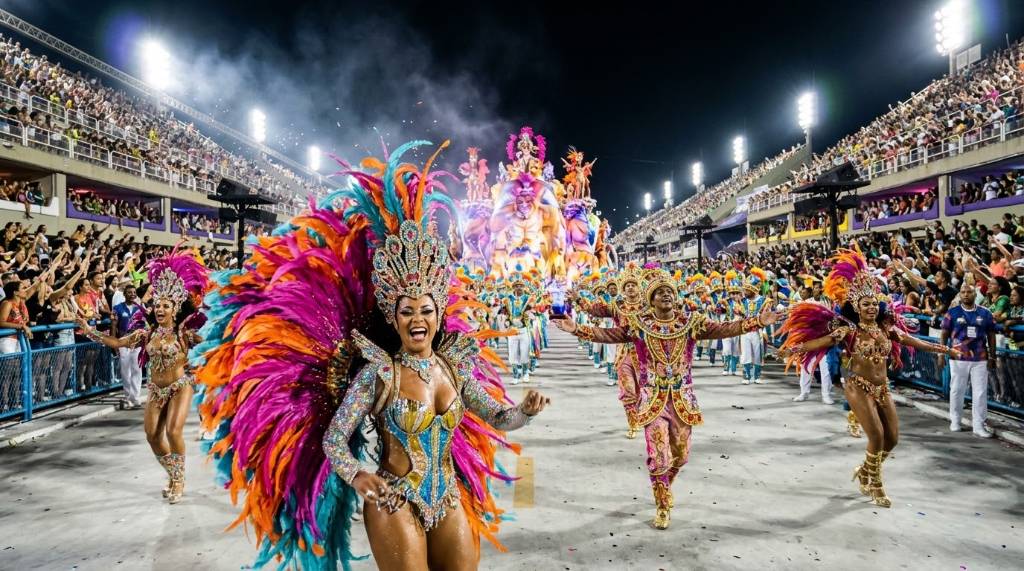
Rio de Janeiro hosts the biggest street party on Earth. Millions of people dance, sing and celebrate for days. Meanwhile, thousands of performers march through the Sambadrome in glittering costumes. The scene feels loud, bright and unforgettable.
However, a trip this big needs planning. Hotels fill up early. The best seats vanish months ahead. Therefore, you should know the key facts before you book anything.
This guide covers the essentials for Rio Carnival 2027. First, you will learn the dates. Next, you will see the parade schedule, ticket types and prices. After that, you will meet the top samba schools and explore street parties. Finally, you will get practical tips on hotels, safety, weather and packing.
When Does the Festival Take Place in 2027?
The main celebration runs from Friday, February 5, to Tuesday, February 9, 2027. Ash Wednesday falls on February 10. Easter lands on March 28, so the dates follow that calendar.
However, the fun starts much earlier. Street parties begin in January. Samba schools open their rehearsals to visitors in the weeks before. Additionally, a final show closes the season on Saturday, February 13, when the best schools return for the Champions Parade.
Here is a quick overview of the main dates.
| Date | Event | Location |
| January 2027 | Street blocos and school rehearsals begin | Across the city |
| Friday, February 5 | Série Ouro parades, night one | Sambadrome |
| Saturday, February 6 | Série Ouro parades, night two | Sambadrome |
| Sunday, February 7 | Special Group parades | Sambadrome |
| Monday, February 8 | Special Group parades | Sambadrome |
| Tuesday, February 9 | Special Group parades | Sambadrome |
| Wednesday, February 10 | Ash Wednesday, the official end | City-wide |
| Saturday, February 13 | Champions Parade | Sambadrome |
Please note that sources sometimes list the dates slightly differently. Therefore, confirm the final schedule on the official league website before you buy tickets.
Sambadrome Parade Schedule Explained
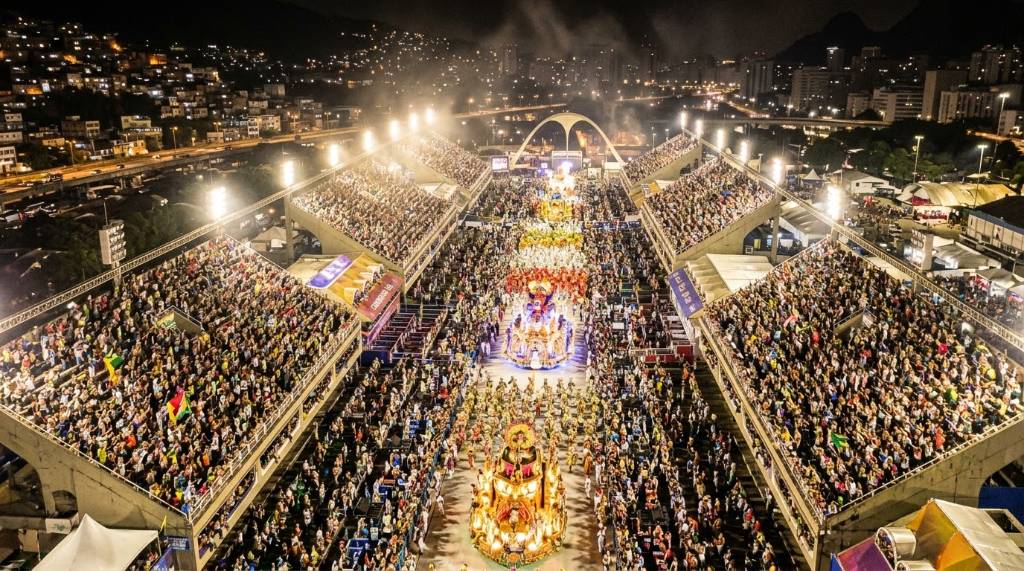
The Sambadrome is a purpose-built stadium on Marquês de Sapucaí Avenue. It holds tens of thousands of fans. The runway is about 700 meters long. Each school marches down it while the crowd cheers from both sides.
Série Ouro: The Opening Nights
The first two nights feature the schools of the second division. These groups fight to win a place in the top league next year. The opening parade usually begins at 9:00 pm on Friday. The shows start strong, and the energy is high. Additionally, tickets cost less, and the crowd feels more relaxed.
Special Group: The Main Event
The top schools take over on Sunday, Monday and Tuesday. This is the heart of the festival. Each school tells a story through floats, costumes, music and dance. Moreover, a panel of 36 judges scores every detail. They watch the drums, the song, the dancing, the costumes and the overall flow.
Each parade lasts around an hour or more. The night runs until sunrise. Therefore, bring comfortable shoes and plenty of patience.
Champions Parade: The Encore
On Saturday, February 13, the top six schools return. They perform again for the crowd. In addition, the winner receives the final applause. This night often feels more joyful than tense. Since the pressure is gone, the performers smile more.
The table below shows what to expect on each night.
| Night | Group | Atmosphere | Best for |
| Feb 5 and 6 | Série Ouro | Relaxed, lively | Budget travelers |
| Feb 7 | Special Group | Intense, competitive | Serious fans |
| Feb 8 | Special Group | Intense, competitive | Serious fans |
| Feb 9 | Special Group | Intense, competitive | Serious fans |
| Feb 13 | Champions | Joyful, celebratory | Late-stay visitors |
Start times for each night come with your ticket. Organizers also post them before the event.
Tickets: Types, Prices and How to Buy
Tickets are the biggest planning task. They sell out fast, especially for the Special Group nights. Therefore, buy early.
Main Ticket Types
The Sambadrome offers several seating styles. Each one gives a different experience.
- Grandstands (arquibancadas): Open seating on long concrete steps. These seats cost the least. You arrive early to claim a good spot.
- Numbered chairs (cadeiras): Assigned seats at ground level or in raised sections. You get comfort and a clear view.
- Box seats (frisas): Private tables for small groups near the runway. They cost more but offer great access.
- Private lounges (camarotes): Upscale areas with food, drinks and air conditioning. They suit groups who want comfort.
- Sector 9: A popular area with numbered seats and one of the best views of the whole runway.
Approximate Prices
Prices change each year, and demand drives them. However, here is a rough guide based on current listings.
| Ticket type | Approximate range | Notes |
| Basic grandstand, Série Ouro | From about US$50 | Lowest entry price |
| Grandstand, Special Group | Roughly R$250 per night and up | Varies by sector |
| Numbered chairs and box seats | Several hundred US dollars | Higher on Sunday and Monday |
| Private lounges | Often over US$1,000 | Food and drinks may be included |
Treat these numbers as estimates. Official sellers set the final prices.
Where to Buy
The league that runs the parades sells tickets through an official online ticket platform. Additionally, licensed tour companies offer packages with hotel pickup, seats and return transfers. These packages cost more, but they save time and stress.
Avoid street sellers. Fake tickets are a real risk. Therefore, always buy from a trusted source and keep your confirmation safe.
Samba Schools to Watch
A samba school is not a classroom. It is a community group, often tied to a neighborhood. Members work all year to build floats, sew costumes and write songs. Each school picks a theme, and the whole parade tells that story.
Several famous names appear again and again. Mangueira, Salgueiro, Beija-Flor, Portela, Imperatriz Leopoldinense, Grande Rio, Mocidade, Vila Isabel and Viradouro all carry strong reputations. However, promotion and relegation shake up the lineup every year. Therefore, check the official 2027 list and parade order before you plan your nights.
What Makes a Parade Great
Watch for these elements:
- The bateria, the drum section that drives the rhythm.
- The enredo, the theme song that everyone sings.
- The porta-bandeira and mestre-sala, the flag bearer and her dance partner.
- The allegorical floats, which tower over the crowd.
- The comissão de frente, the opening group that sets the tone.
Additionally, you can visit school rehearsals before the main event. These sessions cost less and feel more personal. Fans sing along, drummers practice, and locals dance until late.
Street Parties: The Blocos
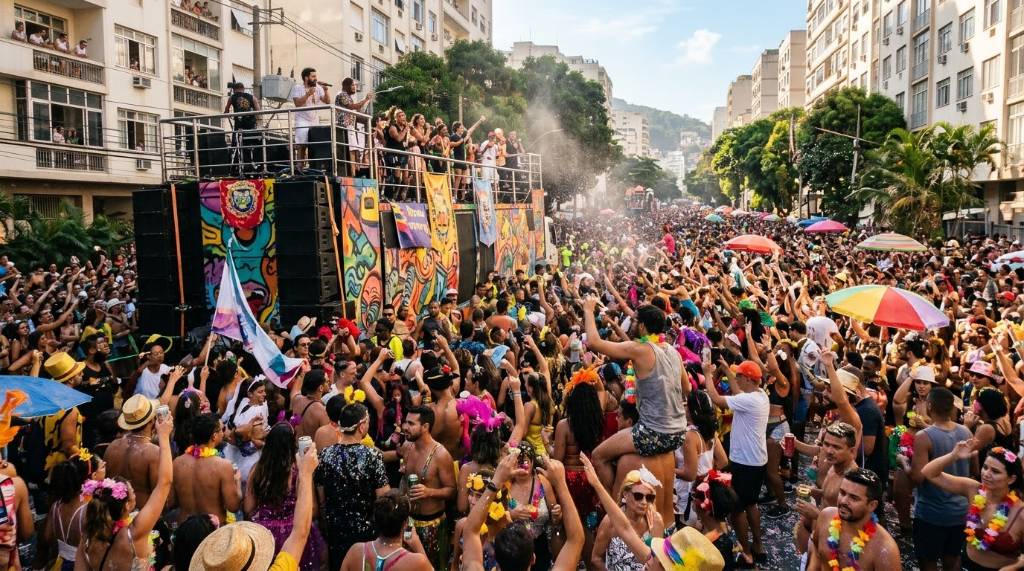
The Sambadrome shows polished performance. Meanwhile, the blocos show the city’s wild side. A bloco is a street party with a band, a truck and thousands of dancers. Some draw a few hundred people. Others attract hundreds of thousands.
Most blocos are free. Many start in the morning and run into the afternoon. People wear costumes, glitter and bright colors. Some groups play samba. Others play pop, funk or old carnival songs.
The city tourism office usually publishes the official bloco calendar in January. Therefore, check it early in the new year. Additionally, arrive early, travel light and stay with your group.
Good neighborhoods for blocos include Centro, Ipanema, Copacabana, Botafogo, Santa Teresa and Flamengo. Each area has its own flavor.
Carnival Balls
If you want a more glamorous night, try a carnival ball. These events mix music, dance floors and costume contests. Some balls are formal, with dress codes and VIP tables. Others are casual and open to everyone.
However, tickets can be limited. Book ahead and read the dress code. Additionally, plan your ride home in advance, because taxis get busy late at night.
Top Attractions Beyond the Parades
Carnival fills the nights, but the days stay open. Rio has world-class sights. Use your free hours well.
- Christ the Redeemer: The giant statue overlooks the city from Corcovado Mountain. Go early to avoid crowds and haze.
- Sugarloaf Mountain: A cable car carries you to panoramic views of the bay. Sunset is the best time.
- Copacabana and Ipanema beaches: Relax, swim and watch the people. Beach vendors sell snacks and cold drinks.
- Selarón Steps: A colorful staircase covered in tiles from around the world.
- Santa Teresa: A hilltop neighborhood with art studios, cafés and an old tram.
- Tijuca National Park: A huge urban rainforest with trails and waterfalls.
- Maracanã Stadium: A legendary football venue with tours on offer.
- Museum of Tomorrow: A modern science museum on the waterfront.
Moreover, many tourist sites change their hours during the festival. Therefore, check opening times and book skip-the-line tickets online.
Where to Stay
Hotel prices jump during the festival. Many places also require a minimum stay of four or five nights. Therefore, book as early as possible.
| Area | Vibe | Why stay here |
| Copacabana | Classic beach life | Easy metro access and many hotels |
| Ipanema and Leblon | Upscale and relaxed | Safe streets and great dining |
| Botafogo and Flamengo | Local and affordable | Close to the Sambadrome by metro |
| Centro and Lapa | Nightlife hub | Near the Sambadrome and many blocos |
| Santa Teresa | Artistic and quiet | Charming guesthouses |
If you prefer a lower cost, consider a hostel or a short-term rental. However, read reviews carefully and choose a well-lit, busy neighborhood.
Getting Around the City
Traffic gets heavy during the festival. Some streets close for blocos. Therefore, plan your routes with care.
The metro is the best option for most trips. It runs quickly and avoids traffic. Additionally, the system often extends its hours during the main nights. The Sambadrome has its own metro stop nearby.
Ride-hailing apps also work well. Prices rise at night, but the service is convenient. Taxis are fine too, but agree on the fare or use the meter.
Walking is easy in beach areas. However, avoid empty streets late at night.
Safety Tips for Visitors
Rio is a joyful city, but crowds attract pickpockets. A few simple habits will protect you.
- Carry only what you need. Leave passports and extra cards at the hotel.
- Use a small cross-body bag or a money belt.
- Keep your phone out of sight in dense crowds.
- Stay with friends and set a meeting point.
- Avoid walking alone late at night.
- Drink water often, and watch your drinks.
- Use official transport after the parades end.
Additionally, save the local emergency numbers in your phone. Share your location with a trusted person.
Weather and What to Pack
February is summer in Brazil. Days are hot and humid. Temperatures often reach the low or mid 30s Celsius. Afternoon showers can also appear. Therefore, pack light clothes and a thin rain jacket.
Here is a simple packing list:
- Breathable shirts, shorts and dresses
- Comfortable walking shoes or sandals
- Sunscreen, sunglasses and a hat
- A small bag with a secure zipper
- A reusable water bottle
- A light costume or colorful accessories
- A portable phone charger
- Insect repellent for evening outings
Moreover, the Sambadrome gets cooler near dawn. A light layer can help.
A Simple Five-Day Plan
If you have limited time, try this outline.
| Day | Morning | Evening |
| Day 1 | Beach time in Ipanema | Samba school rehearsal |
| Day 2 | Christ the Redeemer | Série Ouro parade |
| Day 3 | Sleep in, then Sugarloaf | Special Group parade |
| Day 4 | Street bloco in Centro | Carnival ball |
| Day 5 | Santa Teresa walk | Special Group parade |
Adjust the plan to your ticket dates. Additionally, rest between late nights, because the pace is intense.
Money-Saving Tips
The festival can cost a lot. However, smart choices keep your budget in check.
- Pick Série Ouro tickets instead of Special Group nights.
- Choose basic grandstand seats.
- Stay outside the beachfront zones.
- Enjoy free street blocos.
- Eat at local lunch buffets, called por quilo restaurants.
- Use the metro instead of taxis.
- Book flights and hotels many months ahead.
In short, you can enjoy the festival without overspending.
Conclusion
The festival in 2027 will run from February 5 to 9, with the Champions Parade on February 13. Série Ouro opens the Sambadrome on the first two nights. Then the Special Group takes over for three nights of high-stakes samba. Meanwhile, free street blocos and carnival balls keep the city alive all day and night.
To make the most of your trip, buy tickets early from official sellers. Book your hotel soon, and choose a safe, well-connected neighborhood. Pack light, stay hydrated and keep your valuables close. Finally, mix the big parades with the city’s beaches, mountains and parks.
Plan well, and the experience will stay with you for life.
Frequently Asked Questions
1. When is Carnival in Rio in 2027?
The main days run from Friday, February 5, to Tuesday, February 9, 2027. Ash Wednesday follows on February 10. The Champions Parade takes place on Saturday, February 13.
2. Where do the main parades happen?
They happen at the Sambadrome on Marquês de Sapucaí Avenue in central Rio. The stadium sits near the city center and has its own metro stop.
3. How much do Sambadrome tickets cost?
Basic grandstand seats start around US$50 on the opening nights. Special Group tickets cost more, and premium seats and lounges cost much more. Prices change each year.
4. Where should I buy tickets?
Use the official ticket platform tied to the parade league, or a licensed tour company. Avoid street sellers and unknown websites to reduce the risk of fake tickets.
5. Which night is best to attend?
Special Group nights offer the most intense competition. However, Série Ouro nights cost less and feel more relaxed. The Champions Parade gives a joyful, low-pressure show.
6. How long does each parade night last?
A night usually starts in the evening and ends around sunrise. Each school performs for about an hour or more.
7. Are the street parties free?
Most blocos are free. You only pay for food, drinks and transport. A few special events charge entry.
8. Is Rio safe during the festival?
Most visitors have a great time. However, pickpocketing is common in crowds. Carry little, stay alert and use official transport at night.
9. What should I wear?
Choose light, breathable clothes and comfortable shoes. Many people add glitter, colorful accessories or a simple costume. Bring a thin layer for cooler hours near dawn.
10. How early should I book hotels and flights?
Book at least four to six months ahead. Prices rise sharply close to the event, and many hotels require a minimum stay.