
Essential Beginner Golf Accessories Every New Player Needs
Starting golf is exciting. The game offers fresh air, friendly competition, and a genuine challenge that keeps you coming back. However, walking into a golf shop for the first time can feel overwhelming. The shelves are packed with gear, and it is not always obvious what you actually need versus what is simply nice to have.
The good news is that you do not need to spend a fortune to get started. A focused set of beginner golf equipment covers everything you need for your first rounds and your first months of improvement. Once you understand the essentials, shopping becomes far simpler and far less stressful.
This guide covers the must-have accessories for every new golfer. Each item has a clear purpose, and together they give you everything you need to enjoy the game from day one.
Why the Right Accessories Matter From the Start
Golf is a precision sport. Every small element of your setup, from what you carry in your bag to what you wear on your feet, affects how you play and how much you enjoy the experience.
Starting with the right gear builds good habits early. It also prevents unnecessary frustration. Losing five balls on your first round because you did not bring enough, or blistering your hand because you skipped a glove, are problems that are easy to avoid. Therefore, investing a little time and money in the right accessories upfront makes a real difference to your early progress.
Golf Clubs: Starting With the Right Set
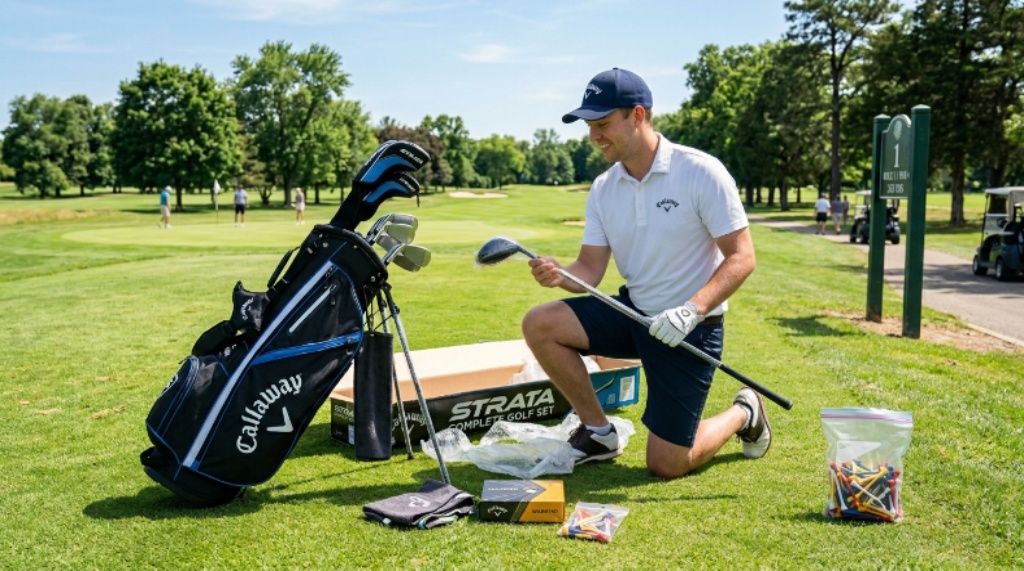
Before anything else, you need clubs. However, as a beginner, you do not need a full set of fourteen. Starting with fewer clubs keeps things simple and helps you develop a more consistent swing faster.
What a Starter Set Should Include
A good starter set typically includes a driver, a fairway wood, a hybrid, a few irons (usually a 6-iron through 9-iron), a pitching wedge, and a putter. This covers every situation you will face on the course without overwhelming you with options.
Starter golf gear is widely available at golf retailers, sports stores, and online marketplaces. Many brands offer complete beginner sets at affordable prices that include a basic bag. These bundle deals represent excellent value and take the guesswork out of building a set from scratch.
Additionally, buying second-hand clubs from a reputable retailer or golf shop is a smart way to stretch your budget without compromising on quality.
A Golf Bag That Works for You
Your bag carries everything you need on the course. Choosing the right one early makes every round more comfortable.
Stand Bags vs. Cart Bags
Stand bags are lightweight and include retractable legs that prop the bag upright when you set it down. They are ideal for golfers who walk the course. Cart bags are heavier and designed to sit on a motorized cart or trolley. They typically offer more storage space.
For most beginners, a stand bag is the better starting choice. It is versatile, easy to carry, and suits both walking and riding. Look for a bag with at least four to five club dividers, a sturdy shoulder strap system, and enough pockets for your accessories, snacks, and waterproofs.
Golf Balls: Stock Up More Than You Think
New golfers lose a lot of balls. This is not a criticism. It is simply the reality of learning a game that involves hitting small objects toward targets that are sometimes several hundred meters away.
Buy more balls than you think you need. A couple of dozen is a sensible starting point. As a beginner, there is no need to buy premium balls. Mid-range two-piece balls are durable, easy to hit, and much more forgiving than high-performance tour balls.
Additionally, consider buying used or refurbished balls in bulk. They perform perfectly well for learning the game and cost a fraction of new balls. Save your money on better equipment elsewhere.
A Golf Glove for Comfort and Grip
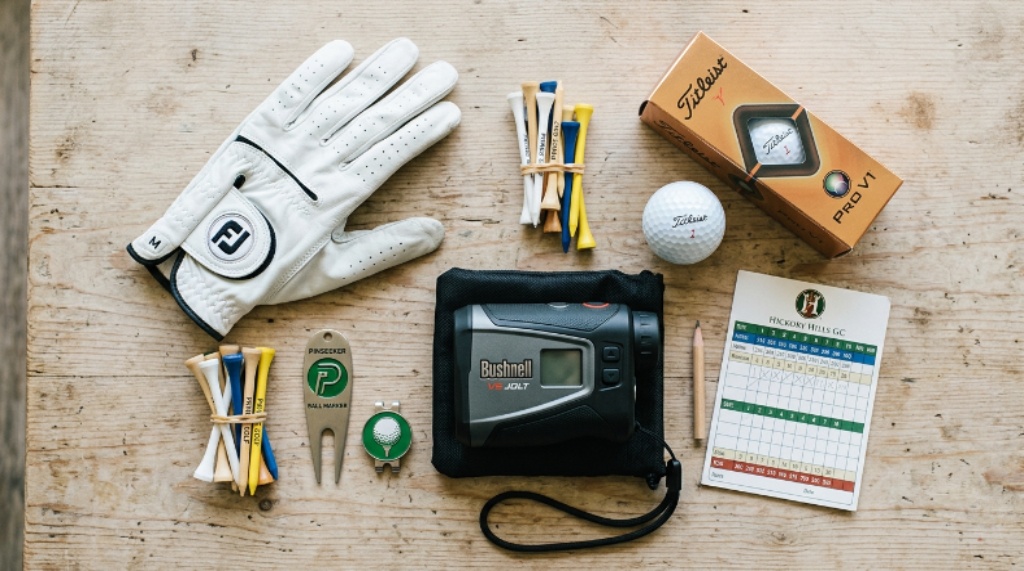
A golf glove is one of the most overlooked pieces of beginner golf equipment, yet it makes an immediate difference. It improves your grip on the club, reduces the chance of the club twisting through impact, and protects your hand from blisters during long practice sessions.
Right-handed golfers wear a glove on their left hand. Left-handed golfers wear one on their right. The glove should fit snugly without restricting movement. Look for a leather or synthetic leather glove that feels natural and allows you to feel the club in your hand.
Most golfers wear through two or three gloves per season, so buying a two-pack is practical and cost-effective.
Golf Tees: Simple but Essential
Golf tees are inexpensive and easy to forget until you are standing on the first tee without any. Always carry more than you think you need, as they break frequently.
Wooden tees are the traditional choice and work perfectly well. Plastic tees are more durable and last longer. Some tees are designed with a specific height to help you tee the ball consistently, which is a useful feature while you are developing your swing.
Keep a handful of tees in your front pocket or in one of your bag’s smaller accessory pockets so they are always within reach.
A Divot Tool and Ball Marker
These two small items are golf etiquette essentials. Every golfer is expected to repair their divots on the green and mark their ball when it is in the path of another player’s putt.
A divot tool is a small forked implement used to fix the pitch marks your ball makes when it lands on the green. Repairing these marks helps maintain the quality of the putting surface and is a basic courtesy to other players.
A ball marker is a small flat token, often a coin or a branded disc, used to mark the position of your ball on the green. Many divot tools include a magnetic ball marker attached to the handle, which makes carrying both items even simpler.
These tools are inexpensive and often included as part of golf accessory packs designed specifically as golf tools for newbies.
A Rangefinder or GPS Device
Knowing how far you are from the hole is incredibly useful. It helps you choose the right club and plan your shots with more confidence.
Rangefinders use laser technology to measure the exact distance to a target. You point them at the flag and press a button. They are accurate and easy to use. GPS golf watches and devices use satellite data to show distances to the front, middle, and back of the green.
Both options are widely available at different price points. Entry-level GPS watches start at very affordable prices and provide enough information for a beginner to make smart club choices. A rangefinder is a slightly bigger investment but delivers more precise measurements, which becomes increasingly valuable as your game develops.
Appropriate Golf Footwear
Golf shoes might not be the first accessory that comes to mind, but they are important. They provide grip on grass, stability during your swing, and comfort over several hours of walking.
Golf shoes come in spiked and spikeless versions. Spiked shoes offer superior grip in wet conditions, while spikeless shoes are more comfortable and versatile. Many courses now require soft spikes rather than metal, so check before purchasing.
For beginners, a comfortable mid-range spikeless shoe is often the best starting point. It works on most course conditions and doubles as a casual walking shoe. Therefore, you get more use from your investment from day one.
Waterproof Clothing and Sun Protection
Weather on the golf course is unpredictable. Being caught in the rain without waterproof gear makes for a miserable round and can damage your equipment. A lightweight, packable waterproof jacket and trousers are worth keeping in your bag at all times.
Sun protection is equally important. Golf rounds often last four to five hours, meaning you spend a significant amount of time outdoors. A wide-brimmed hat or peaked cap protects your face and helps you see clearly in bright sunlight. Apply sunscreen to exposed skin before you play, especially on your neck, forearms, and the back of your hands.
Additionally, a pair of polarized sunglasses reduces glare and makes it easier to track your ball in the air, which is a genuine benefit for beginners still developing their ball-tracking skills.
A Scorecard Holder and Pencil
Keeping score is a fundamental part of golf. A simple scorecard holder protects your scorecard from wind and moisture. It keeps it flat and readable throughout the round. Most clubs provide scorecards and pencils at the pro shop, but having your own pencil in your bag means you are never caught short on the first tee.
Some golfers use golf scoring apps on their phones instead of a physical scorecard. These apps often include helpful features such as GPS distances, handicap tracking, and shot statistics. Both approaches work equally well for beginners.
Conclusion
Getting started in golf does not require an enormous investment. It requires the right investment. Focus on building a practical, complete kit before spending money on premium upgrades. A good starter set of clubs, a comfortable bag, enough golf balls, a glove, tees, a divot tool, and appropriate footwear cover everything you need for your first rounds.
From there, adding a rangefinder, weather gear, and sun protection completes your setup. Starter golf gear does not need to be expensive to be effective. It needs to be functional, reliable, and suited to where you are in your game right now.
Every great golfer started exactly where you are. With the right accessories in your bag, you will be free to focus on what matters most, learning to love the game.
Frequently Asked Questions
How much should a beginner spend on golf accessories?
A practical beginner setup, including clubs, a bag, balls, gloves, tees, and footwear, typically costs between $300 and $600. Buying used clubs and bulk balls can reduce this significantly. You do not need to spend more until you know the game suits you.
Do beginners really need a golf glove?
Yes. A golf glove improves grip, reduces twisting at impact, and prevents blisters during practice sessions. It is a small, inexpensive item that makes an immediate difference to comfort and consistency.
Should I buy a rangefinder as a beginner?
It is not essential from day one, but it is a worthwhile early investment. Knowing your distances helps you make better club selections and speeds up your learning. An entry-level GPS watch is an affordable way to start.
What type of golf bag is best for a new player?
A lightweight stand bag is the best choice for most beginners. It is versatile, easy to carry, and works whether you walk or ride a cart. Avoid oversized cart bags until you have established a regular playing routine.
How many golf balls should a beginner carry per round?
Carry at least a dozen, especially for your first few rounds. Beginners often lose balls in water hazards, rough, and wooded areas. Running out of balls on the course is frustrating and avoidable. Stock your bag generously until your ball-striking improves.